


March 22, 2026
WASHINGTON / TEHRAN — The conflict between the United States, Israel, and Iran has entered a dangerous new phase, with President Donald Trump issuing a stark ultimatum to Tehran while military strikes continue across multiple Iranian cities.
Trump’s 48-Hour Ultimatum
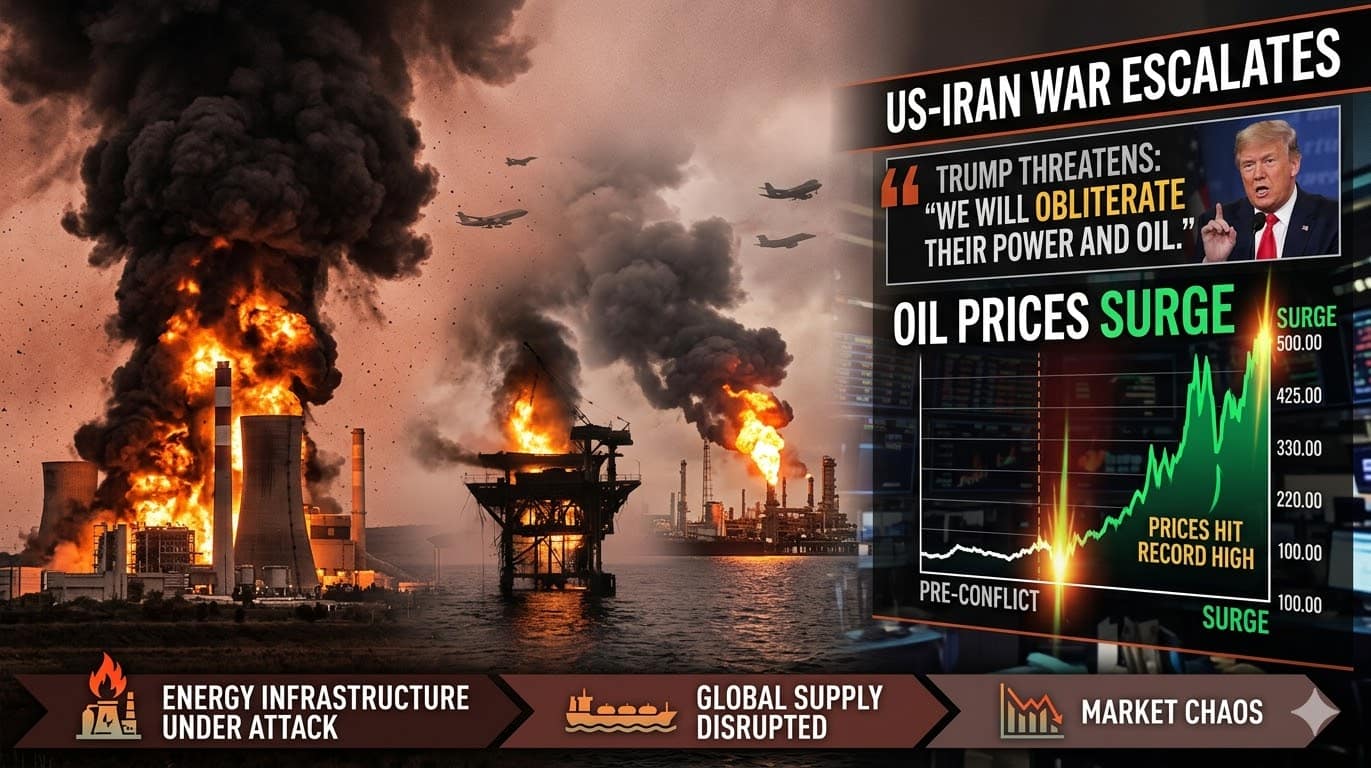
President Trump has threatened to “obliterate” Iran’s power plants if Tehran fails to fully reopen the Strait of Hormuz within 48 hours. The threat marks a significant escalation, as the strait’s closure has blocked the passage of approximately 21 million barrels of oil per day since the war began on February 28.
Iran has responded defiantly, warning it will retaliate by striking all energy infrastructure, desalination plants, and IT systems linked to the US and Israel across the Middle East if its power grid is targeted.
Strikes Continue on Both Sides
US and Israeli forces have carried out fresh strikes on Tehran, Karaj, Isfahan, and Natanz, with Iran’s Atomic Energy Organisation confirming that the Natanz nuclear facility was hit. Iran has struck back, launching missile attacks on southern Israel, wounding dozens in the cities of Dimona and Arad, with 88 people hospitalised and 10 in serious condition. Israeli Prime Minister Benjamin Netanyahu described it, as reported by Al Jazeera, as a “difficult evening of battle”.
Oil Prices and Global Economic Impact
The war’s economic toll is rapidly mounting. Oil prices have surged from $65 per barrel before the conflict to $119, despite US efforts to stabilise markets. Iranian energy strategist Mahdi Arabsadegh has warned that prices could reach $150 per barrel if the war continues for another 10 days.
The world’s 20 largest airlines have collectively lost over $53 billion in market value since the conflict began, with jet fuel costs doubling and Gulf hub airports severely disrupted — the worst crisis for the airline industry since the COVID-19 pandemic.
Regional and Global Reactions
Several nations have condemned Iran’s attacks on Gulf shipping. The United Kingdom, France, Germany, the UAE, and Bahrain jointly criticised Tehran’s strikes on vessels and infrastructure. Saudi Arabia has declared Iranian embassy staff, including the military attaché, persona non grata, ordering them out of the country within 24 hours, as Tehran’s attacks on the Gulf continue.
The UK further accused Iran of launching ballistic missiles at the joint US-UK Diego Garcia base in the Indian Ocean, though the attack was unsuccessful. Iran denied responsibility.
Meanwhile, a nuclear-powered British submarine, HMS Anson, has arrived in the Arabian Sea, reportedly positioning near the Strait of Hormuz, as UK Prime Minister Keir Starmer authorised the use of British military bases for US strikes on Iranian targets.
How Long Could This Last?
Analysts are questioning the US strategy, with experts noting that forcing Iran into submission would be extremely difficult given the country’s size and population. Trump’s next steps remain uncertain, and the tools available to end the war quickly remain unclear, as reported by Al Jazeera.
Countries further afield are already feeling the impact. Sri Lanka has raised fuel prices for the second time in two weeks, with petrol jumping to 398 rupees per litre, as the government prepares for a prolonged conflict in the Middle East.
Source: Al Jazeera
Follow Digital Waves News for continuing coverage of the US-Iran conflict.