


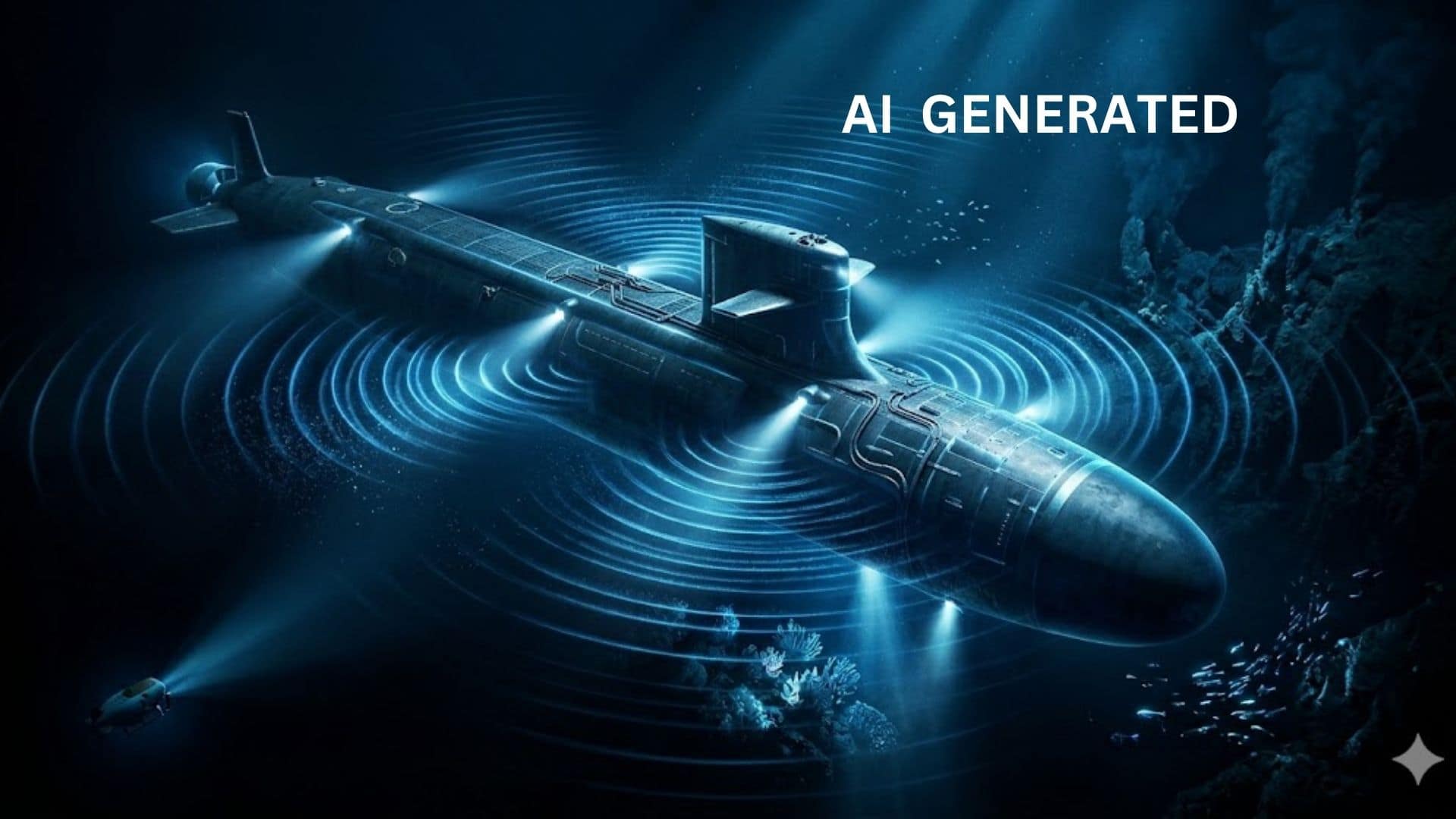
The ongoing conflict between the United States and Iran over the past few days raises a deeper and more curious question: what is China doing during this West Asia war? It is important for the world to understand the strategic thinking of this rising “dragon power”. The reported destruction of Iran’s naval asset by the United States using advanced submarine capabilities once again highlights the immense power of underwater warfare. This raises a critical question—does only the US possess such strength, or has this event pushed other global powers to rethink future warfare strategies?
The US action against Iran demonstrates that naval dominance is no longer just about visible fleets; the real power may lie beneath the ocean surface. This could signal to other nations that underwater warfare may define the next era of superpower dominance. In this context, China’s actions become extremely significant. China has already begun large-scale ocean mapping operations across the Pacific, Indian, and Arctic Oceans. This is not a small effort—it involves dozens of research vessels and hundreds of underwater sensors conducting high-resolution seabed mapping. These vessels move in tight grid patterns, using standard scientific methods, with the clear objective of building a detailed 3D understanding of the ocean floor and underwater conditions.
Why does this matter to us? Especially for India, China’s activities in the Indian Ocean region demand serious attention. Are we prepared for such a future of underwater warfare? If not, what does this mean for the future of our naval strength and sovereignty? In deep ocean environments, it is nearly impossible to detect where a submarine is hiding or how it may strike naval assets during a conflict. The question is, are we capable of detecting and countering such threats?
With advanced 3D ocean floor mapping technology, submarines can hide, navigate silently, and strike with precision. Do we possess such technology in India, or are we dependent on other countries for it? Can we develop indigenous capabilities to match or compete with China? These are not small questions—they are critical concerns for national security. In the deep ocean, where visibility is limited, a hidden submarine can become a silent but deadly threat. While countries have territorial rights over surface waters, the underwater domain remains largely unregulated, making it even more dangerous.
Experts have long pointed out that submarine warfare is one of the most complex and critical forms of modern combat. It involves silent navigation, understanding underwater terrain, tracking enemy submarines, and deploying underwater sensors or weapons. According to US intelligence assessments, such capabilities enable navigation, concealment, and strategic positioning—turning scientific data into military advantage. Clearly, this is not just scientific exploration; it is battlefield preparation beneath the sea.
China’s focus is not random. It is actively mapping strategic choke points and military-sensitive zones, including areas near Taiwan and the Philippines, around US bases in Guam and Hawaii, the Malacca Strait—a global trade lifeline—and key Indian Ocean routes near Sri Lanka and Indonesia. These are precisely the regions where any future naval conflict among major powers could unfold.
There have already been reports of Chinese vessels operating in the Bay of Bengal, at times switching off tracking systems while conducting seabed mapping, acoustic analysis, and identifying submarine routes. This raises direct concerns for India’s security, particularly regarding naval bases and critical shipping lanes.
China describes these missions as marine research, climate studies, and resource exploration. However, under its policy of civil-military fusion, civilian data is seamlessly shared with the military. This means that even a research vessel can function as a strategic intelligence platform.
At the same time, China is working on what is often described as an “underwater Great Wall”—a network of seabed sonar sensors and monitoring systems across key maritime zones. This system is designed to act as an underwater surveillance shield capable of detecting submarines and securing strategic waters.
China is also rapidly expanding its nuclear submarine fleet and is expected to significantly increase its underwater capabilities in the coming years. With the development of advanced submarines and underwater drones, it is clear that China is preparing to dominate the underwater domain.
Experts warn that while the United States has long held an advantage in submarine warfare, China’s aggressive mapping and technological expansion could gradually close that gap. Future wars may not be decided only by weapons but“Beneath the Surface: Is China Preparing for the Next Era of Underwater Warfare?” by who understands and controls the ocean environment better.
This is not just about mapping oceans—it is about preparing for future naval conflicts, controlling global sea routes, and achieving stealth and detection superiority underwater. Submarines may well become the defining weapon of future warfare.
This article is based on reports and analysis from Reuters, Business Insider, and other global media sources.