


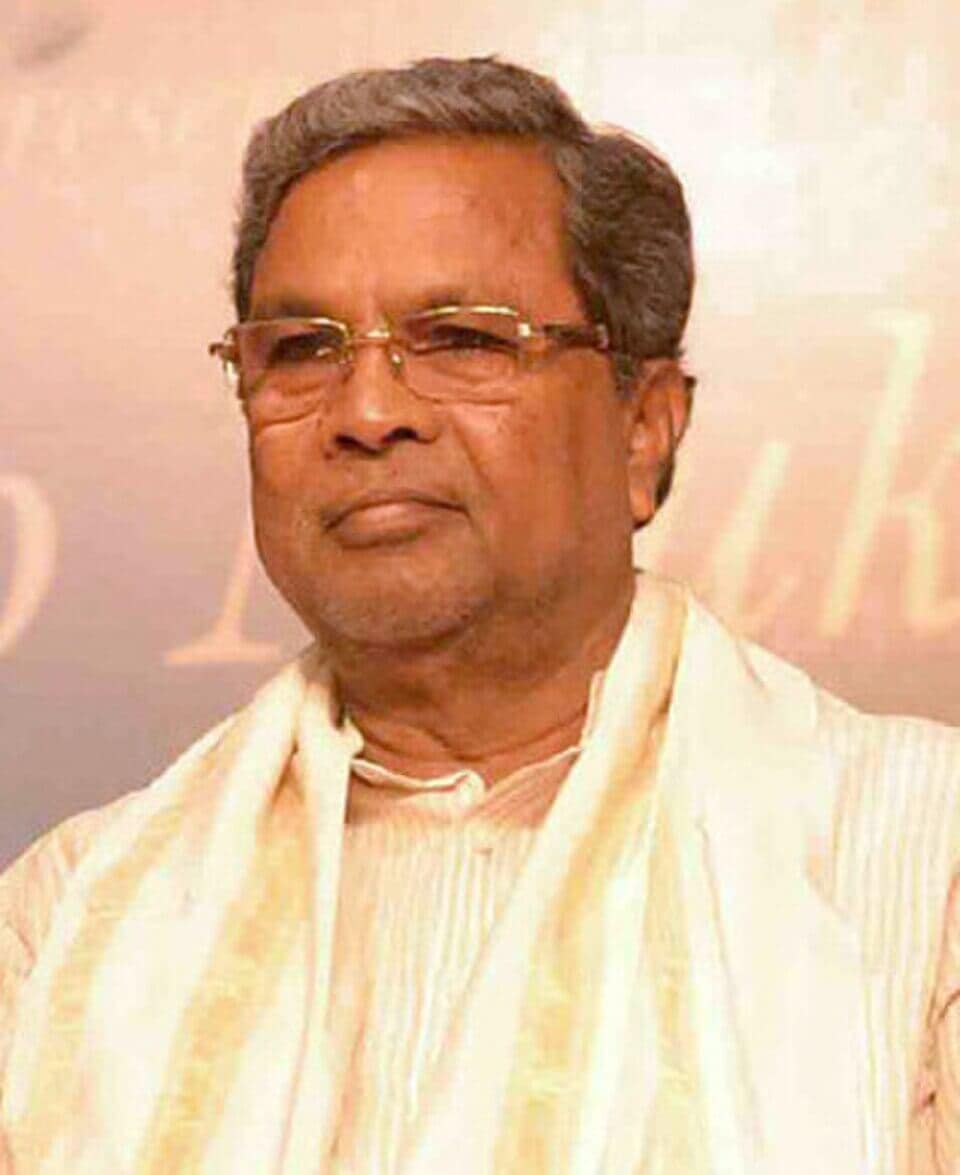
Three years ago, Karnataka voters handed the Congress party a decisive mandate. Last week, Chief Minister Siddaramaiah stood before the people one last time — not to ask for anything, but to account for what was done. Days later, he resigned.
It is not often that a sitting chief minister walks into a public convention, presents a clean scorecard, and then quietly steps aside. But that is exactly what the arc of Siddaramaiah’s final days in office looked like.
On May 27, at a grand convention in Tumakuru marking three years of the Congress government, Siddaramaiah laid out his achievements before the people. Just one day later, on May 28, he submitted his resignation at Lok Bhavan, ending months of intense speculation over a leadership change in Karnataka. In a press conference, he said he had always maintained he would resign if the party high command requested him to and that he had abided by that decision.
D K Shivakumar, who served as Deputy Chief Minister and Karnataka Pradesh Congress Committee president under Siddaramaiah, is expected to be formally named the next Chief Minister at the Congress Legislature Party meeting.
But before the curtain came down, Siddaramaiah made sure to leave behind a record. Here is what that record looks like.
So, What Did the Karnataka Government Actually Do in Three Years?
The Congress party went into the 2023 Karnataka Assembly elections with a manifesto containing 580 commitments. That is not a small number. Most political parties make promises on paper and quietly forget them once the votes are counted.
Siddaramaiah’s government fulfilled over 290 of those 580 promises — more than half — in just three years, with the remaining commitments pledged to be met within the next two years.
“We implemented the five guarantees one by one from the moment we came to power. Besides that, we have fulfilled other promises too. We are standing before you today to express our gratitude,” the Chief Minister said at the Tumakuru convention.
That is a politician speaking the language of accountability. And in today’s political climate, that is refreshing.
The Five Guarantees: Where It All Started
Before the 2023 elections, the Congress party made five specific promises to the people of Karnataka. These were not vague aspirations — they were concrete, costed, and time-bound commitments.
Shakti — Free bus travel for all women across Karnataka. Women who once spent hundreds of rupees a month on daily commutes now travel free. This single scheme changed the daily lives of millions of women, especially in smaller towns and rural areas.
Anna Bhagya — Free rice for families below the poverty line. At a time when food inflation was squeezing household budgets, this scheme put food security back on the table — literally.
Gruha Lakshmi — A monthly cash transfer directly to women who are heads of their households. This was not charity. It was recognition that women carry the financial weight of millions of Indian homes and deserve direct support.
Gruha Jyothi — Free electricity up to a certain unit limit. Power bills had been a source of anxiety for low and middle income households. This scheme addressed that directly.
Yuva Nidhi — A monthly unemployment allowance for educated young graduates still looking for work. In a state with growing youth unemployment, this was a lifeline.
All five were implemented. Not promised again. Not pushed to a committee. Implemented.
Karnataka’s Economy: The Numbers Behind the Narrative
Siddaramaiah did not just talk about welfare schemes. He spoke about where Karnataka stands as an economy today.
He claimed Karnataka has emerged as one of the country’s strongest economies, with per capita income in the state surpassing the national average and making a major contribution to GST collections.
During the Tumakuru convention, he also inaugurated and laid foundation stones for development works worth Rs 682 crore in the district alone. That is not a symbolic gesture. That is infrastructure moving on the ground.
His Parting Shot at the Centre
Siddaramaiah criticised the Centre over the cancellation of the NEET-UG 2026 examination, blaming the Union government for administrative failures that affected over 22 lakh students nationwide. “The Centre ignored our suggestion to conduct medical entrance tests on the lines of Karnataka’s CET model. Their failure has pushed lakhs of students into uncertainty,” he said.
He also drew a sharp contrast between his government’s inclusive approach and what he described as the BJP’s divisive politics. “After coming to power, we worked for the development of all people, irrespective of caste and religion. We have empowered the poor of all castes and all religions,” he said.
The End of an Era — And What Comes Next
Siddaramaiah thanked the people of the state for supporting him during his two terms as Chief Minister, and expressed gratitude to the party’s top leadership for offering him the post.
With Siddaramaiah’s exit, Karnataka Congress now turns a new page. D K Shivakumar is poised to take over as Chief Minister, with the Congress Legislature Party meeting called to formally elect the next leader. The remaining 290-plus manifesto promises now pass into the next leader’s hands — and Karnataka will be watching closely to see whether the momentum holds.
Editor’s Note: This article was originally published to mark three years of the Siddaramaiah-led Congress government in Karnataka. It has been updated to reflect Siddaramaiah’s resignation on May 28, 2026, and the expected transition of power to D K Shivakumar.