


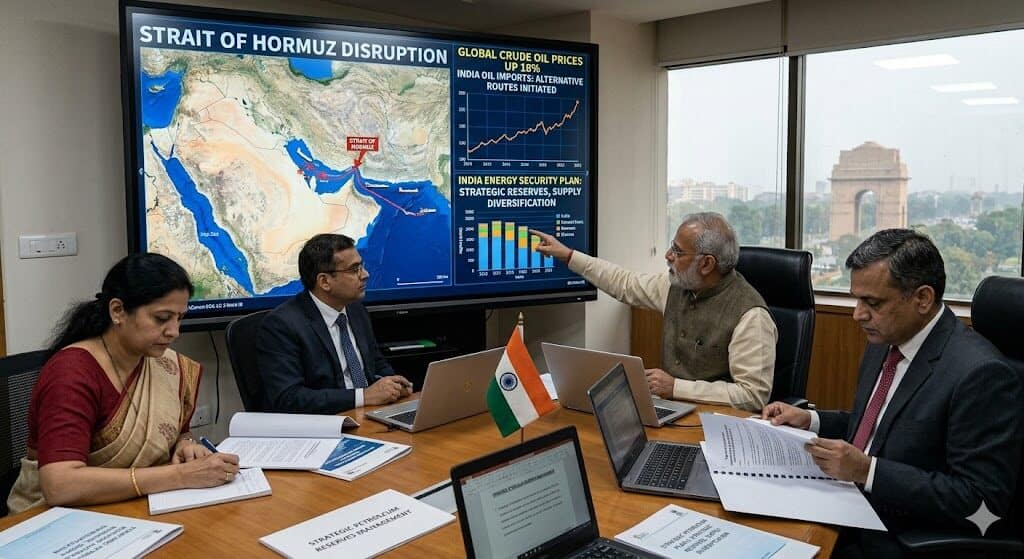
New Delhi, May 28 (UNI): The disruption in the Strait of Hormuz — one of the world’s most critical oil transport routes — has triggered global energy concerns. For India, which imports nearly 85% of its crude oil requirements, this situation poses a serious economic challenge. However, the government has so far managed the crisis effectively through a well-calibrated balancing act.
The Strait of Hormuz, located between Iran and Oman, handles nearly 20% of global oil trade. Any disruption here directly impacts international crude prices. Since the tensions escalated on February 28, 2026, Brent crude oil prices have surged by around 40%, crossing $96 per barrel.
Impact on Indian Economy
India is the world’s third-largest oil importer. A sustained rise in global oil prices puts pressure on the country’s current account deficit, inflation, and transportation costs. Higher fuel prices also affect almost every sector — from agriculture and manufacturing to logistics and household budgets.
Despite these pressures, domestic petrol and diesel prices have risen only modestly — 7.7% for petrol and 8.6% for diesel since the disruption began.
Government’s Multi-Pronged Strategy
The Indian government has deployed several measures to shield consumers and maintain economic stability:
- Excise Duty Cuts: On March 27, the government significantly reduced special additional excise duty on petrol to just ₹3 per liter. This helped contain retail price increases.
- Oil Marketing Companies’ Burden: Public sector oil companies are currently absorbing daily losses of approximately ₹550 crore on petrol, diesel, and LPG sales.
- Strategic Petroleum Reserves: India is strategically releasing crude from its emergency reserves to smooth supply shocks.
- Import Diversification: The government has increased oil imports from alternative sources such as Russia, Saudi Arabia, UAE, and the United States to reduce dependence on the Hormuz route.
In major cities like Delhi, petrol is currently selling at around ₹102 per liter — much lower compared to many developed nations like the UK (₹170) and Germany (₹210).
Broader Economic Implications
Sustained high oil prices could widen the fiscal deficit as the government continues to subsidize fuel. Economists warn that prolonged disruption may also affect the rupee’s value against the dollar and push inflation higher, particularly in food and transport sectors.
However, India’s economy has shown remarkable resilience. Strong foreign exchange reserves, improved domestic oil and gas production, and rapid growth in renewable energy capacity are acting as buffers.
Long-Term Energy Security Focus
This crisis has once again highlighted the urgent need for reducing dependence on imported fossil fuels. The government is accelerating its push towards renewable energy, electric vehicles, and green hydrogen.
Future Outlook
As of now, the situation in the Strait of Hormuz remains uncertain. If the disruption continues, the government may need to take further decisions.
Source: UNI (United News of India)