


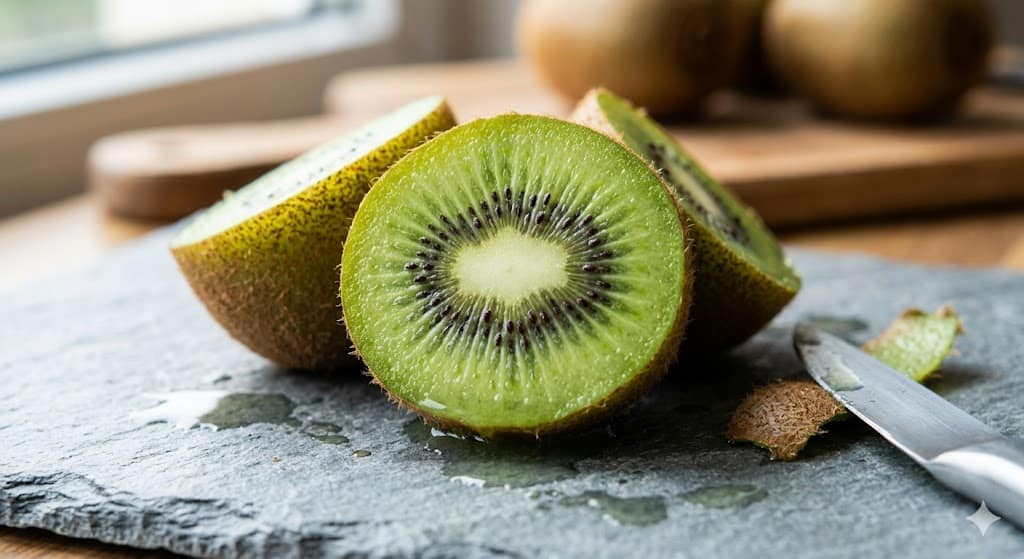
The Union government has launched a dedicated mission to transform Arunachal Pradesh into India’s premier organic kiwi destination, with Union Minister Jyotiraditya Scindia officially kicking off the “Arunachal Kiwi” initiative in the presence of Chief Minister Pema Khandu on May 20.
The mission, backed by a budget of roughly ₹167 crore, aims to overhaul the entire kiwi supply chain — from farming and cold storage to branding and exports — across six cluster hubs in regions including Ziro Valley, Dirang, Kalaktang, Shi Yomi, and Dibang Valley.
The stakes are significant. Arunachal Pradesh already accounts for more than half of India’s kiwi output, producing over 7,050 metric tonnes annually. Yet farmers currently earn just ₹20–40 per kg for lower-grade fruit and around ₹120 per kg even for premium produce — a fraction of what imported kiwi fetches in the same markets. The mission seeks to change that by cutting out middlemen, building cold-chain infrastructure, restoring the state’s lapsed organic certification, and targeting a four-to-six-fold jump in farmer earnings.
A key strategic advantage the mission aims to exploit: Arunachal’s harvest season runs from November to January — precisely when New Zealand, the world’s dominant kiwi supplier, is in its off-season. This window could open doors in Southeast Asian, Middle Eastern, and European markets for what officials are branding “Arunachal Organic Kiwi.”
The initiative is built on convergence across multiple central ministries, NABARD, ICAR, APEDA, and private investors, and will tie in with Arunachal’s own state-level Kiwi Mission running through 2035. Beyond exports, it also envisions agri-tourism — farm stays and farm-to-fork experiences in Ziro Valley and Dirang — as an additional revenue stream.
Scindia framed the launch within a broader “Brand North East” strategy, under which each of the eight northeastern states is being positioned around a signature product: Sikkim for organic farming, Mizoram for ginger, Nagaland for coffee, Meghalaya for Lakadong turmeric, and now Arunachal for organic kiwi.
Chief Minister Khandu called it a defining moment for the state’s agricultural economy, noting that kiwi has already emerged as a viable alternative to traditional jhum (shifting) cultivation in the high-altitude regions.
The government has set a target of breaking into international export markets by FY 2028, with QR-enabled packs that trace each batch back to individual farmers.