


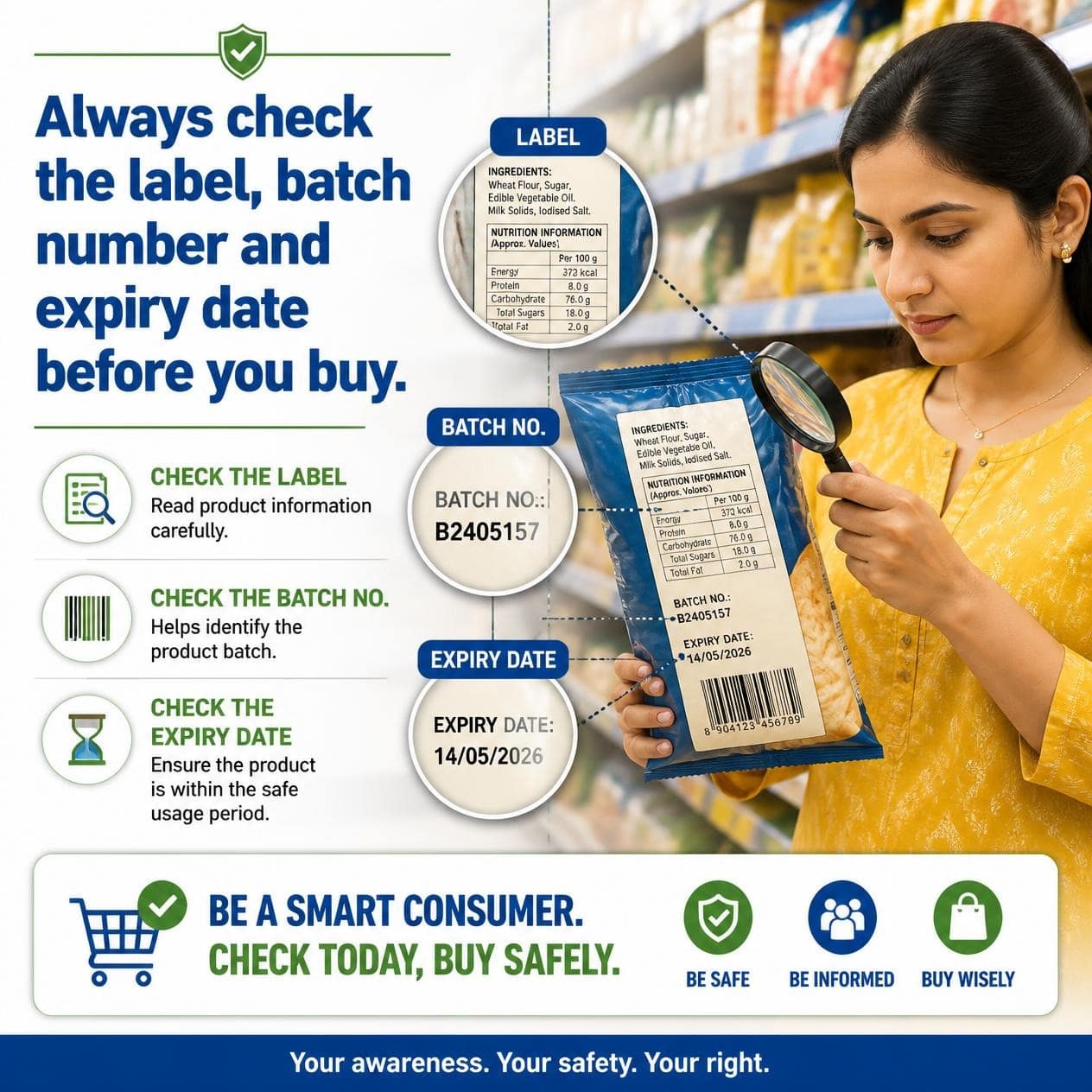
A simple 7-point checklist to help you spot fake, expired or repackaged medicines before you buy. Protect yourself and your family.
Most of us trust the medicines we buy without a second thought. But counterfeit, expired or repackaged medicines do exist in the market, and they can cause real harm. A fake medicine may contain the wrong ingredient, too little of the right one, or none at all. This matters most for injections and life-saving drugs, where a wrong dose can be dangerous.
You can’t always spot a fake by eye, but a few simple habits lower your risk considerably.
1. Buy only from licensed pharmacies.
A genuine pharmacy displays its drug licence. If you’re unsure, ask to see it. Be wary of sellers who operate from homes, roadside stalls or unknown online pages.
2. Always ask for a bill.
A proper invoice should show the medicine’s name, batch number and expiry date, along with the pharmacy’s details. Keep it until the medicine is finished. If something goes wrong, the bill is your proof.
3. Check the expiry date and batch number.
Look for a clearly printed manufacturing date, expiry date and batch number. Faint, smudged, uneven or overwritten printing is a warning sign. Never accept expired medicines.
4. Inspect the packaging.
Watch for:
- Spelling mistakes or blurry printing on the label
- A pack that looks different from the one you bought earlier
- Loose, damaged or resealed seals
- Vials or bottles with uneven filling, odd colour, floating particles or cloudy liquid where the medicine is normally clear
5. Scan the QR code or barcode where available.
Many medicine packs now carry a QR code or barcode. Scanning it should show product details. If the code doesn’t scan, or the details don’t match the pack, treat the medicine with suspicion and don’t use it until you’ve checked.
6. Be careful with unusually cheap or unusually rare medicines.
A big discount on an expensive medicine, or an offer of a hard-to-find drug without a prescription, deserves questions. If a price looks too good to be true, ask why.
7. Compare with your previous purchase.
If you’re buying a regular medicine, compare the new pack with the old one: colour, size, printing and tablet shape. If the difference is unexplained, ask your pharmacist or doctor.
What if you suspect a fake?
- Don’t use the medicine.
- Keep the pack, the bill and any leftover medicine.
- Report it to your state drug control authorities or the nearest drug inspector.
- Tell your doctor, especially if you’ve already taken it and notice unusual side effects or no improvement.
- Don’t stop a prescribed medicine on your own without first speaking to your doctor about a safe replacement.
A note for hospitals and clinics
Buy from authorised distributors, keep purchase records, and check batch numbers and labels at the time of receiving stock.
The bottom line
Medicines are only helpful when they are genuine. A few minutes of checking, such as a licensed shop, a proper bill, a readable label and a working QR code, can protect you and your family.
“This article is for general awareness and does not replace medical advice.”