


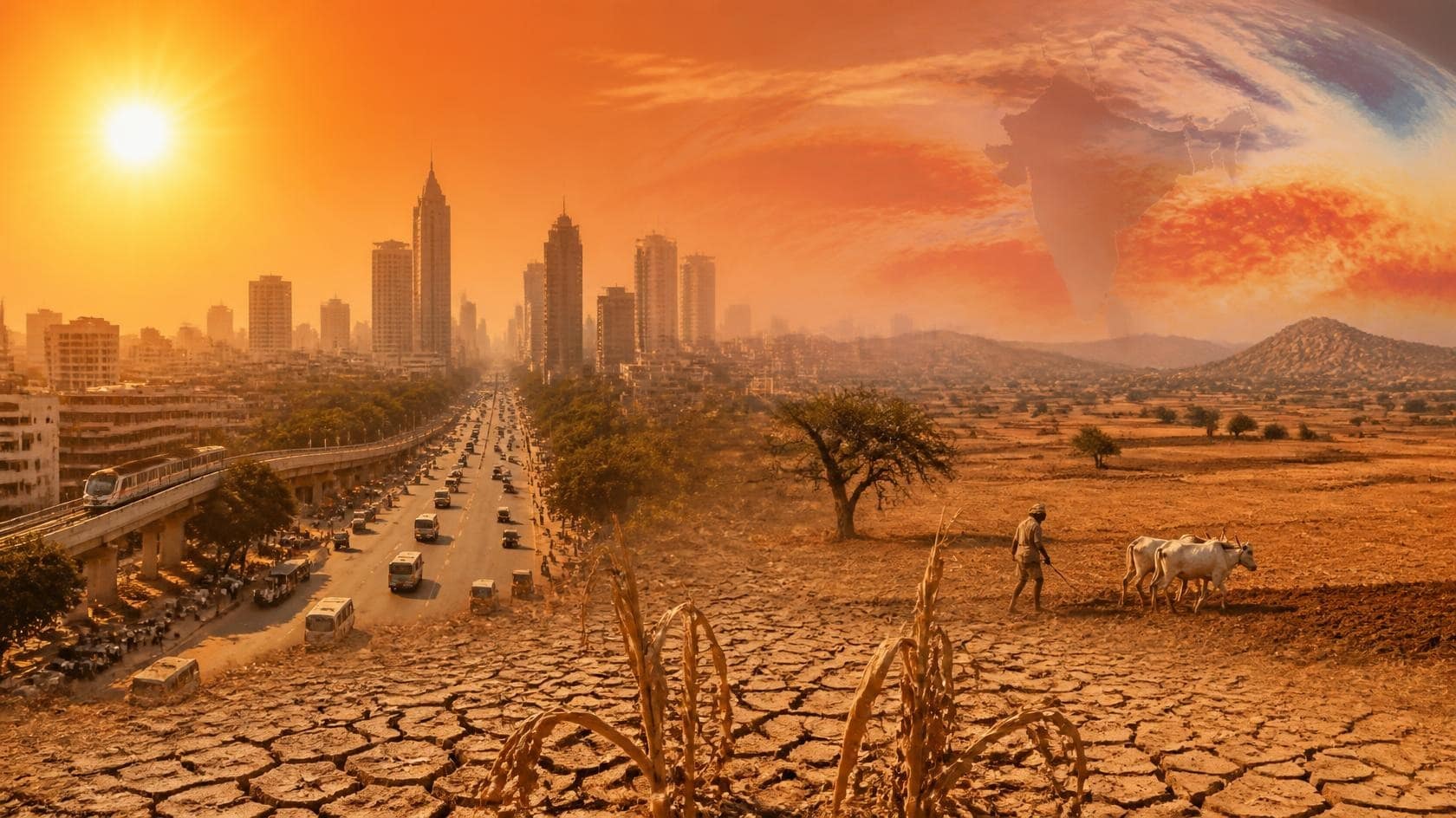
If the past week has felt unbearable, you’re not imagining it. Bengaluru just touched 32.2°C, its hottest September in nearly 75 years. And it’s not just the city. Across Karnataka, taluks and villages far outside Bengaluru are reporting the same suffocating heat — in many cases, feeling even worse than in the city itself.
Here’s a simple breakdown of why this is happening, why it feels different from past years, and what you can do about it.
Why Bengaluru City Feels So Hot
Bengaluru’s heat problem has been building for years, mainly because of how the city itself has changed:
- Concrete everywhere. Roads, buildings, and pavements soak up heat all day and release it slowly at night. This is called the Urban Heat Island Effect — it’s why the city doesn’t cool down properly, even after sunset.
- Fewer trees. Bengaluru has lost a huge amount of its tree cover over the decades. Trees provide shade and naturally cool the air — without them, the sun hits bare concrete directly.
- Lakes have disappeared. Most of Bengaluru’s traditional lakes have dried up or been built over. Water bodies used to cool the surrounding air naturally — that effect is largely gone now.
- More vehicles and buildings. More traffic and more high-rises mean more heat and pollution trapped closer to the ground.
Why Even Taluks and Villages Feel This Heat
This is the surprising part — villages don’t have Bengaluru’s concrete problem, so why does it feel just as hot, or worse, in taluks and small towns across the state?
- No shade from buildings. Ironically, Bengaluru’s tall buildings and narrow streets create pockets of shade. Open villages and small towns have no such shade, so the sun hits you directly all day.
- The humidity trap. September is a transition month between monsoon and dry season. Fields and vegetation release moisture into the air. When this moisture combines with heat, it raises humidity — making the air feel much stickier and hotter than the thermometer shows.
- Rural areas are urbanising too. Small towns and taluk centres across Karnataka now have more tar roads, concrete houses, and quarrying activity nearby. Bare rock and asphalt absorb and radiate heat just like in the city.
- Dry soil bakes in the sun. When soil is moist, the sun’s energy goes into evaporating that moisture, which cools the ground. But this year, with rainfall running low, the soil has dried out across most districts — so instead of cooling, the ground just bakes and radiates heat back.
So Why Does It Feel Worse Than Previous Years?
Evaporation, humidity, and sun have always existed. What’s different this year is a rare combination of factors stacking on top of each other:
- A strong El Niño pattern has disrupted normal wind flow, replacing cool monsoon winds with dry, hot winds across Karnataka.
- A serious rainfall shortage — over 122 taluks in Karnataka have had zero rain for weeks, leaving the ground dry and cracked.
- Clear, cloudless skies mean there’s nothing blocking the sun’s direct heat, and this effect is stronger across much of Karnataka’s southern plateau region, which sits at a relatively high elevation (around 3,000 feet).
- A warmer planet overall. Global temperatures are higher now than they were even 5–10 years ago, so a normal dry spell today produces more extreme heat than the same dry spell would have in the past.
Together, these four factors are why this September feels more like peak summer (April) than a normal monsoon-season month.
When Will the Rain Return?
According to the India Meteorological Department (IMD), dry conditions are expected to continue for another day or two. However, light to moderate rain and thunderstorms are likely to return across south-interior Karnataka’s taluks and districts around September 10–11, 2026, which should help break the heat and clear the humidity.
How to Stay Safe Until Then
- Don’t just drink plain water — mix in ORS (oral rehydration salts), or drink coconut water and buttermilk (majjige) to replace lost salts.
- Wipe down with a damp cloth on your face, neck, and arms if the humidity feels suffocating.
- Keep curtains/blinds closed during peak afternoon hours to block direct heat, but leave a vent or door slightly open so the room doesn’t trap humid air.
- Wear light, breathable cotton clothes, and avoid strenuous activity during the hottest part of the day (typically 12 PM–4 PM).
Warning Signs of Heat Exhaustion
Watch for these in yourself or family members, especially since high humidity stops sweat from evaporating and cooling you down properly:
- Heavy sweating with cold, pale, or clammy skin
- Dizziness or feeling faint
- Severe fatigue, weakness, or muscle cramps
- Headache, nausea, or vomiting
If someone becomes confused, faints, or their skin turns hot and completely dry (not sweaty), this can mean heat stroke — seek medical help immediately.
This article is intended for general information and awareness. If you or someone near you is showing signs of heat exhaustion or heat stroke, please seek medical attention promptly.
Sources
- Times of India, “At 31.9°C, Bengaluru closer to 75-year September heat record”
- Moneycontrol, “Hottest September in 75 years: What disrupted Bengaluru’s weather calendar”
- The New Indian Express, “Feels like summer: Bengaluru sizzles at 32 degrees Celsius”
- The Hindu, “Bengaluru too hot: Dramatic increase in built-up area to blame, says study”
- India Meteorological Department (IMD), district forecast, Bengaluru