


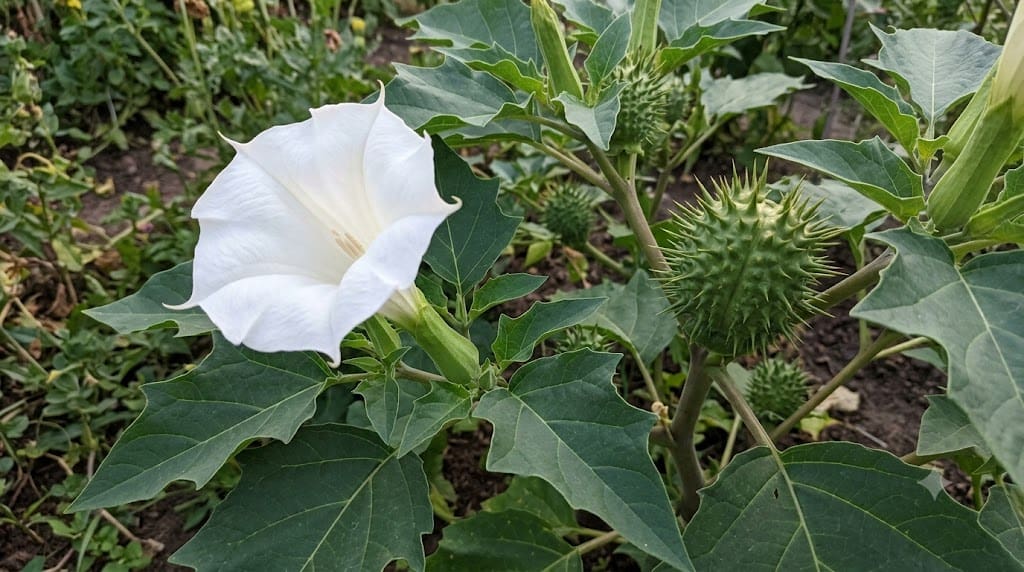
If you’ve ordered groceries or “natural” wellness products online recently, here’s something worth knowing: Karnataka’s food safety regulator has just suspended the food licences of Amazon, Swiggy Instamart, and BigBasket — all three, at once — after finding that a poisonous plant called datura was being listed and sold on their platforms as if it were food.
Here’s what datura actually is, why this is a genuine safety concern and not a minor labelling slip, and what happened when regulators stepped in.
What is datura?
Datura — also spelled Dhatura — is a flowering plant that grows widely across India, often as a weed along roadsides and in open fields. It’s sometimes recognisable by its trumpet-shaped flowers and spiky seed pods.
The plant is well known in traditional and religious contexts in parts of India, but every part of it — the fruit, the seeds, the leaves — contains naturally occurring toxic compounds. It is not a food crop, and it is not safe to eat in any quantity, regardless of how it’s packaged or marketed.
Why is datura dangerous?
Datura’s toxicity comes from powerful alkaloid compounds that affect the nervous system. Consuming its fruit or seeds — even in small amounts — can cause serious symptoms, and it has been linked internationally to severe poisoning cases and fatalities. Regulatory bodies elsewhere have similarly flagged datura species as highly poisonous to humans and animals.
This isn’t a plant where “natural” means “safe.” It’s the opposite: datura is one of the more dangerous plants that can be mistaken for, or deliberately marketed as, a food or wellness product.
How did it end up on online platforms?
According to Karnataka’s Food Safety and Drugs Administration, an investigation found that datura fruits and seeds were being listed for sale on Amazon, Swiggy Instamart, and BigBasket as food products intended for human consumption. Some of these listings reportedly carried FSSAI licence or registration numbers — the same kind of official food-safety numbering used for legitimate food products — which could have made the listings look credible to an ordinary shopper.
Inspectors also found that packets of datura fruits and seeds were being stored in warehouses connected to these platforms, ready for sale or distribution to customers who ordered them online.
What Karnataka authorities did
On August 24, 2026, the Karnataka Commissionerate of Food Safety and Drug Administration issued an order suspending the food licences of Amazon, Swiggy Instamart, and BigBasket, effective until further orders. The regulator said the sale, display, or promotion of datura fruits and seeds for human consumption through any online platform was a serious public health and food safety concern.
The action wasn’t limited to the platforms themselves. The department also ordered the suspension of licences and registrations of the vendors and suppliers who had been listing and supplying datura products through these platforms, and directed both state and central food-safety officials to take further action against them.
All three companies were given a hearing before the order was issued.
What the platforms said
The regulator’s order noted differing responses from the three companies:
- Amazon did not submit any response during the inquiry.
- Swiggy Instamart asked for more time to provide documentation of what action it had taken after being notified.
- BigBasket told the authority it had already stopped selling datura fruits and seeds, and said it would relabel any future related listings to clearly state “Not for human consumption.”
The food safety department found none of these responses satisfactory enough to avoid the suspension, and the order remains in effect until further notice.
Why this matters beyond Karnataka
This case raises a question that goes well past one state or one poisonous plant: when millions of people order groceries and wellness products through a few taps on their phone, who is actually responsible for making sure what’s listed is safe to consume?
Online marketplaces host thousands of sellers, and platforms don’t manually vet every single product listing before it goes live. That gap — between what appears on an app and what regulators have actually verified — is exactly what allowed datura, a plant with no legitimate place in a “food” listing, to reach warehouses and, potentially, customers’ homes.
What consumers should do
A few practical takeaways if you shop for groceries, herbs, or “natural” wellness products online:
- Don’t assume an FSSAI number on a listing guarantees safety. As this case shows, numbers can appear on listings that regulators later find were not properly verified or authorised for that product.
- Be cautious with unfamiliar “natural” or “herbal” products, especially ones sold loosely as seeds, dried fruit, or powder without clear, reputable branding.
- If you’ve purchased datura or an unfamiliar seed/fruit product online recently and are unsure what it is, do not consume it. Dispose of it safely and, if you have any symptoms after consuming an unfamiliar product, seek medical help immediately and mention what was consumed.
- Report suspicious food listings — most platforms and state food safety departments accept consumer complaints about mislabelled or unsafe products.
The bigger picture
Karnataka’s action against three major platforms at once is a strong signal that regulators are willing to act broadly, not just against a single seller, when public health is at stake. Whether this leads to tighter, platform-wide screening of food and herbal listings — rather than reactive enforcement after the fact — is the question worth watching as this story develops.
Digital Waves News will update this report if the platforms respond further or if Karnataka’s food safety department issues additional orders.