


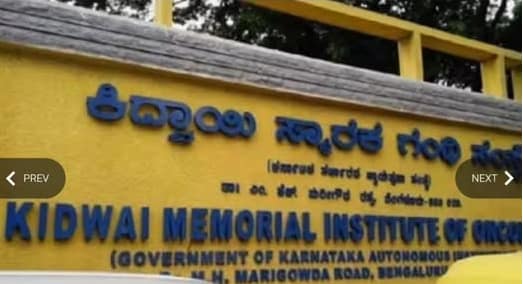
Bengaluru — Every morning, families arrive at the Kidwai Memorial Institute of Oncology (KMIO) in Bengaluru, carrying little more than the hope of saving someone they love. For most, reaching this cancer hospital in Bengaluru doesn’t mark the end of a hard journey — it’s only the beginning of one that can stretch on for months, sometimes years.
This is especially true for families from Karnataka’s poorer, more remote districts — places like Raichur, Haveri, Koppal, Ballari, Vijayapura, and Kalaburagi — as well as families arriving from across South India, North India, and even neighboring Bangladesh. Many of them end up living on the hospital premises for the entire duration of a child’s cancer treatment.
Kidwai Memorial Institute: India’s Second-Best Cancer Hospital
Kidwai is ranked second in India for cancer treatment, after AIIMS, according to information shared by the institute’s own PR team. It draws patients not only from across Karnataka but from South and North India, and even neighboring Bangladesh — for many, it is the only realistic option for affordable cancer care within reach.
The scale of care here is staggering: more than 100 new cancer cases are registered every single day, and the hospital treats over 2,000 patients daily across a wide range of cancers — breast cancer, oral cancer, lung cancer, cervical cancer, and childhood blood cancers among them. As an autonomous body functioning under the Karnataka state government, Kidwai receives full institutional support and resources to sustain this scale of care.
The hospital has built a strong reputation for skilled oncologists, affordable quality treatment, and ongoing cancer research — and its survival rates continue to improve year after year, even as the number of new patients keeps climbing.
Childhood Leukemia: The Silent Battle in Kidwai’s Pediatric Ward
Nowhere is the scale of Kidwai’s work felt more deeply than in its pediatric oncology ward.
Here, children who should be in school or playing outside instead spend their days hooked to IV lines, undergoing chemotherapy, and enduring repeated blood draws — grappling with an illness far too complex for them to fully grasp. Many of these patients are under five years old, battling blood cancer for reasons that, in most cases, doctors are unable to clearly identify.
The most common diagnosis among them is Acute Lymphoblastic Leukemia (ALL), the most frequently occurring cancer in children. There is real reason for hope: when ALL is caught early and treated at a specialized center like Kidwai, survival rates now top 90 percent in many cases.
Getting there, however, is no small feat. A full course of leukemia treatment typically runs about two and a half years, packed with intensive chemotherapy cycles, frequent hospital visits, ongoing bloodwork, medication, and close monitoring throughout. Many families end up staying on the hospital premises for six months or more, since most come from rural, underprivileged backgrounds with no steady job or income — leaning on the support Kidwai provides throughout this long journey.
How Childhood Blood Cancer Is Actually Treated
Once a child is diagnosed with blood cancer — most often Acute Lymphoblastic Leukemia — doctors follow internationally recognized treatment protocols.
The first step is pinpointing the precise type of blood cancer involved, its genetic and molecular makeup, and whether it has reached the brain or spinal fluid. This requires blood work, a bone marrow biopsy, imaging, and sometimes a spinal tap.
From there, treatment generally unfolds in three stages:
- Induction — an intensive first month of chemotherapy aimed at pushing the cancer into remission
- Consolidation — further chemotherapy to clear out any remaining cancer cells
- Maintenance — lower-intensity chemotherapy that continues for over two years to keep the cancer from returning
Depending on how a child responds and how high-risk their case is, doctors may also bring in targeted therapy, immunotherapy, radiation, or a stem cell transplant. Throughout all of it, children need regular bloodwork, transfusions, infection control, proper nutrition, and emotional support.
World-Class Equipment Behind Kidwai’s Leukemia Care
Few cancer hospitals in India can match Kidwai’s technological capabilities. The institute is equipped with advanced machines and equipment — many costing crores of rupees — placing it among a select group of hospitals in the country offering such facilities. It provides Da Vinci Xi robotic surgery (Kidwai was among the first government cancer hospitals in India to have it), permanent implant brachytherapy using radioactive iodine seeds, laparoscopic procedures, limb-conserving prosthetics, and endoscopic treatments.
For children battling leukemia specifically, a few pieces of equipment matter most:
- Bone Marrow Transplant (BMT) unit — a dedicated 14-bed unit, operational since around 2021, that has performed over 100 allogeneic and autologous transplants, including a pediatric matched sibling donor transplant for a blood-related condition. This is the critical facility for children whose leukemia requires a transplant rather than chemotherapy alone.
- Blood cell separator — used for apheresis, the process of separating and collecting specific blood components, supporting both diagnosis and transplant-related procedures in blood cancers.
- Autoanalysers and lab diagnostics — used for blood and lab-based testing, essential for monitoring a child’s blood counts throughout months of chemotherapy.
Kaveri (name changed), Age Six: One Family’s Fight
One of the many children fighting this battle is Kaveri, a six-year-old from Raichur.
Two months into her treatment, she still has roughly two and a half years ahead of her before doctors expect her protocol to be complete. Her mother has put her entire life on hold to be by her side — leaving home, family, and any source of income behind, as countless other mothers at Kidwai have done too. For these women, the hospital premises have effectively become their new home.
Families often arrive with everything they think they’ll need: clothes, blankets, sometimes even food from home. Many from North Karnataka bring jowar rotti made in their villages, carrying a taste of home with them through the long months ahead.
This is where Kidwai’s support system becomes a lifeline. The institute runs a ‘Dharmashala’ for outstation patients, along with dedicated facilities at Infosys Dharmashala and Dakshinamurthy Dharmashala, where patients and caretakers are served three meals a day — nutritious food for patients, quality meals for caretakers. Each patient is provided a mattress, and both patients and caretakers have access to clean RO drinking water. Solar-powered hot water facilities mean hot water is always available for bathing, and separate community halls are set aside for men and women, along with dedicated space for drying clothes. Bathrooms and toilets are maintained to a high standard of cleanliness and hygiene throughout the premises.
The Temple That Feeds Kidwai’s Families
Right next to the hospital gates stands the Sri Siddhi Vinayaka Temple, near Dairy Circle. Recognizing the heavy financial and emotional strain on cancer patients and their families, the temple serves a free, hot lunch every day between 12:00 PM and 2:00 PM — reaching more than 800 people daily, including caretakers, parents, relatives, and guardians accompanying patients.
For hundreds of families who have poured their life savings into hospital bills, this daily ‘Annadanam’ isn’t just a free meal. It’s a small act of grace delivered right at the hospital’s doorstep, at the exact moment families need it most.
Affordable Medicine, Accessible Treatment
Recognizing that many patients come from underprivileged backgrounds, Kidwai has worked to keep treatment within reach. Anti-cancer medicines sold through the Kidwai Cancer Drug Foundation are priced 40–60% lower than market rates, easing the financial burden on families already managing the cost of long-term care.
Patients holding a BPL card, or belonging to SC/ST communities, receive free treatment from the day of admission until treatment is complete, and the hospital also accepts several government and private insurance schemes. Kidwai also maintains its own in-house blood bank, ensuring a steady, reliable supply for the transfusions that leukemia patients depend on throughout their treatment.
Reaching Further, Educating Early
To expand its reach beyond Bengaluru, KMIO has established a peripheral cancer center in Kalaburagi, with new centers being developed in Tumakuru, Mysuru, Shivamogga, and Belagavi — a deliberate push to bring cancer care closer to patients across Karnataka.
The hospital also conducts regular cancer screening camps and continuous awareness campaigns, urging parents, caretakers, and guardians to act immediately once cancer symptoms are suspected, working through taluk- and district-level hospitals to guide early referrals — a critical factor in improving survival outcomes.
Room for Anyone Who Wishes to Help
Kidwai’s treatment and patient-welfare services are fully funded and supported by the Karnataka state government — the institute does not depend on charity or public donations to run. That said, Kidwai does welcome contributions from anyone who personally wishes to give back. Interested individuals can contribute ₹25,000 as a one-time donation, entitling them to sponsor one day of free food for patients, once a year, for the rest of their lives. Others choose to mark their birthdays by donating ₹10,000 and providing a day of free meals for patients. Some prefer to help in more personal ways — donating groceries for patient meals, or providing essentials like wheelchairs, cots, mattresses, IV stands, and medicines, as an opportunity to help in whatever way they can.
More Than a Medical Journey
Cancer treatment doesn’t just test a child’s body — it tests an entire family. Parents give up jobs. Savings run out. Siblings are left behind in villages while mothers stay at their sick child’s bedside. Each round of chemotherapy brings a mix of hope and dread.
For the children, it’s a fight against something they can barely comprehend. For their parents, it’s a daily balancing act between offering comfort and living with constant uncertainty.
Conclusion: A Place of Hope
Kidwai Memorial Institute of Oncology remains a critical lifeline for thousands of cancer patients every year, running successfully with the full backing of the Karnataka state government. The success rate keeps growing, and many who once arrived here in fear and uncertainty have gone on to complete their treatment and start new chapters in their lives.
Alongside world-class medical treatment, families camping on the hospital grounds also receive genuine, well-rounded support — free stays, nutritious food, clean water, hot water for bathing, hygienic sanitation, and community spaces — ensuring that no family has to face this journey alone.
For these children, beating cancer depends on more than chemotherapy and medicine — it depends on the compassion and support of the people around them.
Every corridor of the hospital holds a quiet story of courage: a child refusing to give up, a mother who won’t leave her side, and doctors doing everything they can to keep hope alive. As one reflection puts it — every bed, every syringe here tells a painful story: pain beyond life, cancer beyond life. And yet, within those same walls, Kidwai continues to offer what so many patients and families are searching for: hope.