


India’s biggest voter list cleanup is underway. Here is what SIR Phase-III means for you and your family.
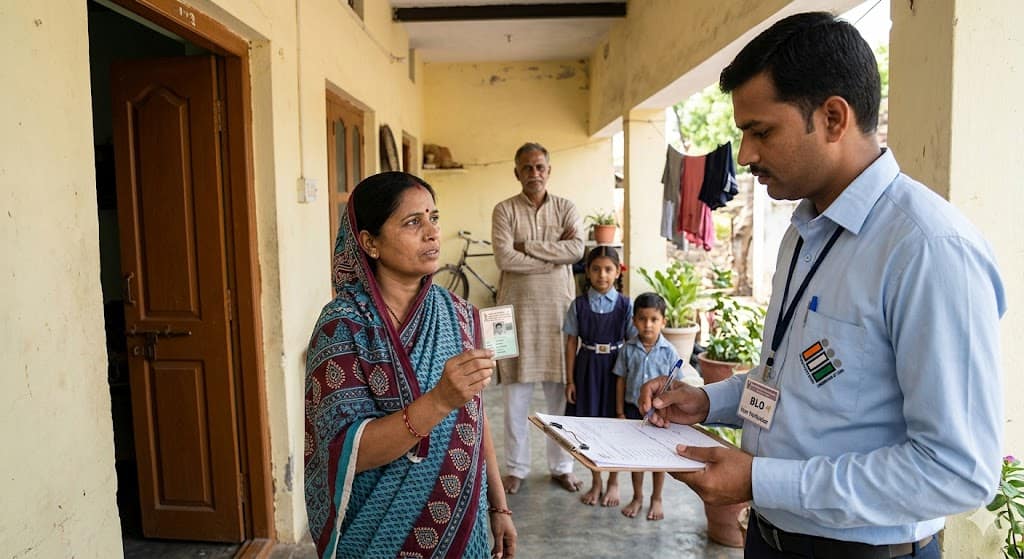
If you live in Karnataka, Delhi, Maharashtra, Telangana, or any of 13 other states, expect a government official at your door sometime between now and October. They are not collecting taxes or checking documents. They are making sure you — and every eligible voter in your neighbourhood — are correctly listed on India’s electoral rolls.
The Election Commission of India announced the conduct of Special Intensive Revision Phase-III of electoral rolls across 16 states and three Union Territories, covering over 36 crore electors in a phased manner. The exercise has been planned in coordination with the ongoing house listing component of the Census to ensure optimal use of field machinery.
This is not a small operation. It is one of the largest democratic exercises happening anywhere in the world right now.
What Is SIR and Why Does It Matter?
SIR — Special Intensive Revision — is the Election Commission’s effort to clean up India’s voter lists. The goal is straightforward but critical. Chief Election Commissioner Gyanesh Kumar appealed to citizens to participate enthusiastically, stating that the aim of SIR is to ensure that only eligible voters are included in the electoral roll and that there are no ineligible voters — such as names of deceased persons or voters who have shifted to another place.
In other words, every ghost voter, every duplicate entry, every missing name — this exercise is designed to fix all of it.
In the earlier two phases of SIR covering 13 states and UTs, over 59 crore electors were covered with the participation of more than 6.3 lakh Booth Level Officers and 9.2 lakh Booth Level Agents. Phase-III adds another 36 crore electors to that count, making the cumulative reach of this exercise truly staggering.
Who Will Come to Your Door?
Over 3.94 lakh Booth Level Officers will carry out house-to-house verification work, supported by 3.42 lakh Booth Level Agents appointed by political parties during the enumeration phase.
These BLOs are typically local government employees — schoolteachers, post office staff, municipal workers — assigned to specific polling booths in your area. They will visit every household, verify existing voter details, add eligible new voters, and flag names that need to be removed.
Political parties also play a role. The ECI requested all political parties to appoint BLAs for each polling booth to ensure full participation and transparency in the process. This means representatives from parties you vote for will also be present to ensure no one is wrongly added or removed.
Which States Are Covered — And When?
The revision happens in staggered batches across different states:
For Odisha, Mizoram, Sikkim and Manipur, house-to-house visits begin May 30 and the final electoral roll will be published on September 6, 2026.
For Karnataka, Meghalaya, Maharashtra, Jharkhand and Delhi, BLO visits will run from June 30 to July 29, 2026, and the final electoral roll will be published on October 7, 2026.
For Telangana and Punjab, house-to-house verification will be held from June 25 to July 24, 2026, and the final electoral roll will be published on October 1, 2026.
For Andhra Pradesh, Arunachal Pradesh, Haryana and Chandigarh, BLO visits will run from June 15 to July 14, 2026, and the final electoral roll will be published on September 22, 2026.
For Tripura, BLO verification visits will take place from September 15 to October 14, 2026, and the final electoral roll will be published on December 23, 2026.
Why Are Himachal Pradesh, J&K and Ladakh Left Out?
The Commission has deliberately not included Jammu & Kashmir, Ladakh and Himachal Pradesh in Phase-III due to logistical and climatic difficulties of high altitude and snow-bound zones. Another reason for the deferment is the ongoing Phase-II of the Census in these territories, which makes field deployment impossible until conditions allow. Their schedule will be announced separately.
What Should You Do?
This is not something to ignore. If the BLO visits your home and finds an error — a wrong address, a deceased family member still listed, or a young adult who turned 18 but never registered — this is your chance to fix it.
Here is what you should do when the BLO knocks:
Be available and cooperative. Answer their questions honestly. If a family member has passed away, inform them so the name can be removed. If someone in your household has recently turned 18, make sure they are added. If you have moved to a new address, update your details.
The ECI emphasised that the exercise is participatory and involves all stakeholders — electors, political parties, and election officials. Your participation is not just helpful — it is what makes democracy work.
The Bigger Picture
With elections always around the corner in India, a clean and accurate voter list is the foundation of a fair vote. This exercise — covering nearly a hundred crore electors across all three phases — is the Election Commission’s most ambitious attempt yet to make sure every genuine voter counts, and only genuine voters count.
If someone knocks on your door in the coming weeks, open it. Your vote is at stake.