


National Desk | New Delhi | May 13, 2026
In the middle of one of India’s most complex and long-running religious debates, the Supreme Court paused on Wednesday to say something quietly profound — that faith is personal, and nobody can demand you prove it at a temple gate.
Observing that Hinduism is a way of life, the Supreme Court said it is not necessary for a Hindu to mandatorily go to a temple or perform a ritual in order to remain a Hindu — and that even lighting a lamp inside a house is enough to prove one’s belief.
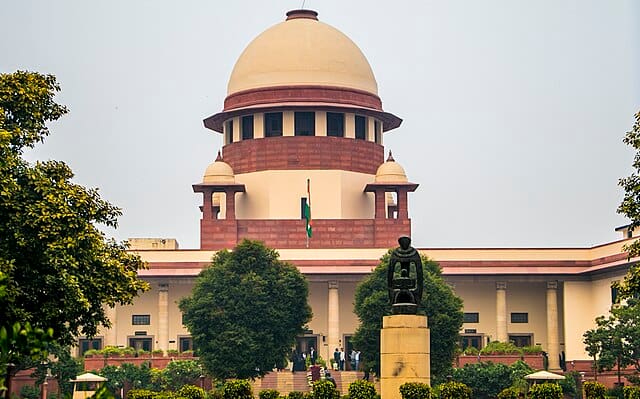
The remark wasn’t a passing comment. It came from a nine-judge Constitution Bench — one of the largest panels the Supreme Court can assemble — currently hearing one of the most consequential religious freedom cases in recent Indian legal history.
What’s the Case About?
The bench, headed by Chief Justice Surya Kant, was hearing petitions related to discrimination against women at religious places, including the Sabarimala temple in Kerala, and on the ambit of religious freedom practised by multiple faiths, including Dawoodi Bohras.
Wednesday marked the 15th day of hearings. A five-judge Constitution Bench had lifted a ban that prevented women between the ages of 10 and 50 from entering the Sabarimala Ayyappa temple in a 4:1 majority verdict in September 2018, ruling that the centuries-old practice was unconstitutional. The review of that verdict is what brought the matter before this larger bench.
What Did the Judges Say?
Senior counsel G Mohan Gopal argued that demands for social justice emerging from within religious communities should not be ignored — and questioned whether every person classified as Hindu truly accepts the Vedas as the highest authority in all spiritual matters.
Justice B V Nagarathna responded: “That’s why Hinduism is called a way of life. It’s not necessary for a Hindu to mandatorily go to a temple or perform a ritual in order to remain a Hindu. One need not be ritualistic and nobody can come in the way of people having their faith.”
Chief Justice Surya Kant added that even if an individual lights a lamp inside a humble hut, that is enough to prove their religion.
Why This Matters
By affirming that Hinduism cannot be reduced to ritual compliance or physical presence at a place of worship, the court is drawing a clear line — faith is between a person and their belief, not between a person and an institution.
The bench also expressed concern that bringing every religious practice before a constitutional court could result in hundreds of petitions and every religion could ultimately “break” as a result.
The hearing is still ongoing. But Wednesday’s observations have already given Indians something worth reflecting on — that belief, in its truest form, has never needed a proof of entry.
Source: PTI | Compiled by National Desk