


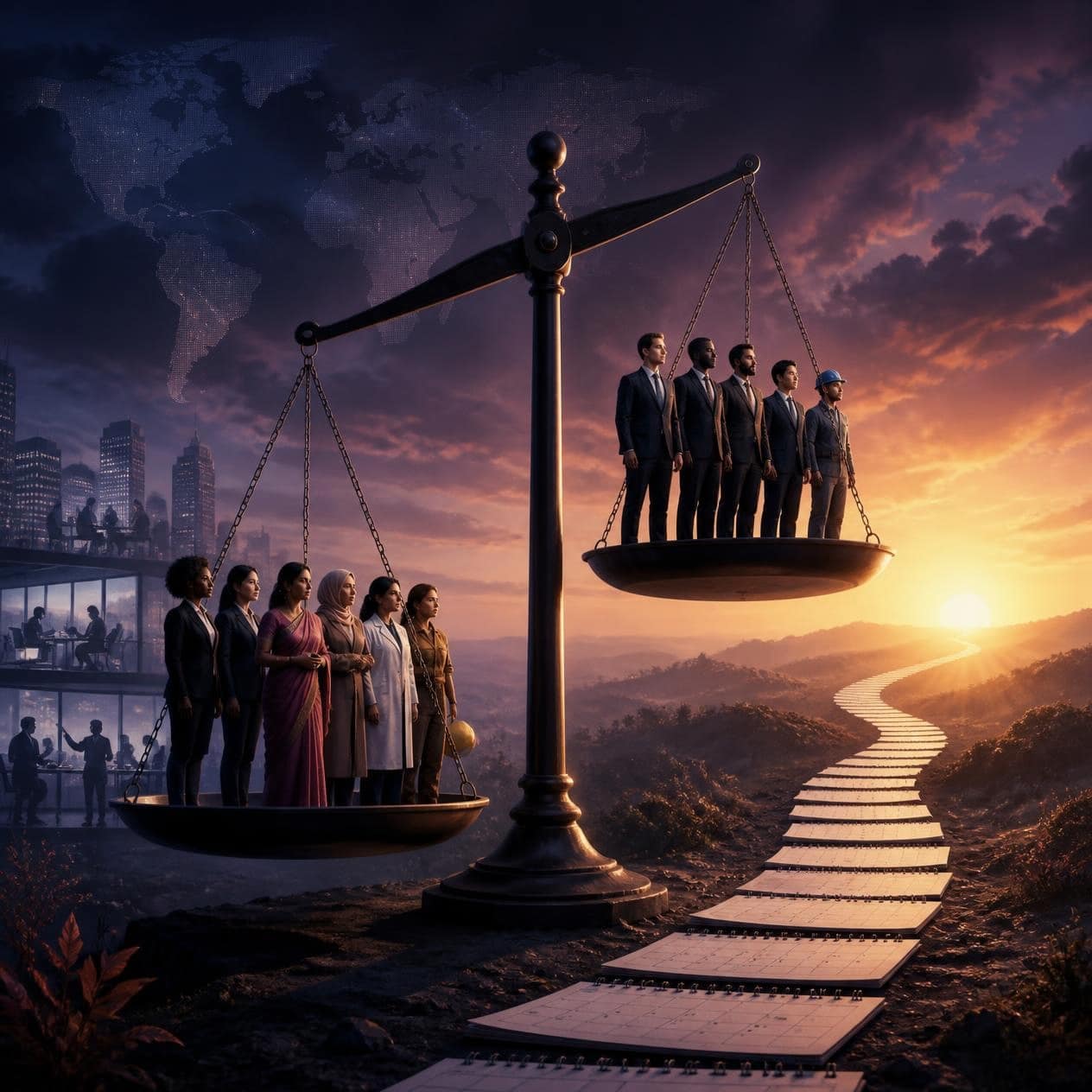
At the current rate of progress, gender equality would take 171 years to achieve, according to a new UN report. The report also finds that the institutions built to advance gains are being defunded and demobilised.
The findings come from Gender Snapshot 2026, which UN Women and the UN Department of Economic and Social Affairs (UN DESA) published on September 17. This guide explains what the number means, what the report found, and why it matters.
Key takeaways
- Not one indicator under SDG 5, the UN’s gender equality goal, is on track to be met by 2030.
- One in three institutions for gender equality has lost institutional power in the past two years, and funding for gender equality is at its lowest since 2021.
- Six in seven countries are led by men.
- The UN says the 171-year figure is not inevitable and is the result of choices.
What is the Gender Snapshot 2026?
The Gender Snapshot is described as the world’s leading source of data on gender equality and the 2030 Agenda. It draws on more than 100 data sources and tracks progress for women and girls across all 17 Sustainable Development Goals. The 2026 edition was released as world leaders prepared to gather in New York for the high-level week of the 81st UN General Assembly.
What does “171 years” mean?
The figure is a projection, not a forecast of what will happen. It shows how long equality would take at the current rate of progress. If the pace changes, the number changes. The UN’s own message is that the delay is the result of choices, made visible through data.
Key findings
1. Institutions for gender equality are losing power and money
One in three gender equality mechanisms, such as ministries or dedicated units, has seen its institutional power eroded over the past two years. Around one in four have had their operating budgets cut, and nearly one in ten have lost control of their budget altogether. Funding for women’s rights organisations has been hit hardest, and 42 per cent of UN entities report that their gender equality work has weakened.
2. Political power is still concentrated among men
The report says the cost of running for office can exceed 100 times a country’s average per-capita income, which excludes many women before the race begins. In some countries, as many as eight in ten women candidates face violence in public life. Women who reach cabinet are still steered away from the top security and economic portfolios: close to nine in ten defence ministers and more than eight in ten finance ministers are men. One report on the findings puts the wait for gender parity in national parliaments at another 63 years.
3. Violence and legal gaps remain widespread
Nearly one in three women globally have survived partner or sexual violence in their lifetime, and 316 million women experienced it from an intimate partner in the past 12 months alone. No country has achieved full legal equality, and 51 per cent of the 131 countries studied still have significant legal gaps. Nearly two thirds of countries offer little or no legal protection for women’s land rights.
4. Women are missing from business and the courts
Women hold only six per cent of corporate CEO positions globally and lead fewer than 20 per cent of the highest courts.
Is there any progress?
There are some gains. The number of countries with a woman as head of state or government rose between 2020 and 2026. But the report’s overall message is that these gains are fragile. As coverage of the report put it, some measures of women’s political leadership have moved backwards even as others inch forward. The UN is also selecting its tenth Secretary-General, a post no woman has held in its 80-year history.
Why it matters
The UN argues that women’s power improves outcomes for everyone. Where women hold real power, results improve across every dimension of the 2030 Agenda, from peace and education to poverty and climate action. UN Women’s Executive Director Sima Bahous made the point directly: “equality without power is not equality at all.”
The India angle
This section is context from other reporting. It is not part of the UN report.
Political representation is a live issue in India. The Women’s Reservation Act, passed in 2023, reserves 33% of seats for women in the Lok Sabha and state assemblies, but it is not yet operational because it is linked to a fresh census and a delimitation exercise. A 2026 constitutional amendment bill meant to speed this up failed to get the two-thirds majority it needed in the Lok Sabha in April. One explainer says that if Census 2027 data is used, reservation in the Lok Sabha may only begin in the mid-2030s. Timelines here could change, so check the latest news.
What does the UN want to change?
UN Women and UN DESA call for a reversal of the political retreat on gender equality. That means giving women an equal voice in political and economic decisions, properly funding gender equality institutions, and protecting women’s rights organisations and civic space.
FAQs
What is the 171-year figure?
It is the time gender equality would take to achieve if the world keeps progressing at the current rate, according to the UN’s Gender Snapshot 2026.
Who published the report?
UN Women and UN DESA, on September 17, 2026.
Is any SDG 5 target on track?
No. The report says none of the SDG 5 indicators is on track to be met by 2030.
Is 171 years inevitable?
No. The UN says it results from policy and funding choices, and that these can change.
How long until women reach parity in parliaments?
Coverage of the report cites another 63 years at the current pace.
Conclusion
The 171-year figure is striking, but the report’s main point is about power and funding rather than the number itself. Institutions meant to advance equality are losing budgets and authority, and women are still shut out of top political and economic posts. Whether the number shrinks depends on the choices governments make now.
Sources
- UN Women: One in three institutions built to advance gender equality stripped of power in just two years
- UN News: Gender equality woefully off track, new UN report reveals
- Business Standard: Women leadership gap a key hurdle in development goals
- Free Malaysia Today: Gender equality “woefully off track”, UN warns
- Sri Lanka Brief: Gender equality would take 171 years to achieve
- SPM IAS Academy: Delimitation Bill 2026 explained (India context)
- The Researchers: Women’s Reservation, a historic law with a long wait (India context)