By Chandrakala R N
In every Indian family, the father or elder is expected to be fair to every child. The moment one child feels he favours another, something breaks. The family may still live under one roof, but trust is gone, and a family without trust slowly falls apart, not in a day, but decision by decision.
A nation’s institutions work the same way. And no institution is more like the head of India’s democratic family than the Election Commission.
The umpire of democracy
The Election Commission belongs to no party. It belongs to every voter, whether they support the ruling party or the opposition. Like an umpire in a cricket match, it works best when nobody questions its decisions, because every team trusts it.
That is why the office of the Chief Election Commissioner carries such weight. Decisions on who is added to the voter list, whose name is removed, and how complaints are handled can shape the voice of millions.
A storm of doubts
Today, that trust is under serious strain.
Gyanesh Kumar’s appointment in February 2025 was controversial from the start. Rahul Gandhi, a member of the selection panel, objected to the government’s late-night decision while the selection process was still being challenged in the Supreme Court. The 2023 law under which he was appointed had already been criticised for replacing the Chief Justice of India on the selection panel with a Union minister, giving the government a majority in choosing the umpire.
In 2025, the Special Intensive Revision (SIR) of voter rolls in Bihar triggered protests, and opposition parties accused the Commission of acting like a spokesperson for the ruling party. Now the most serious question has come from inside the Commission itself. On September 23, an investigation by The Indian Express reported that Election Commissioners Sukhbir Singh Sandhu and Vivek Joshi put their objections on record at least 14 times in 10 months, including four on a single day, on decisions about adding and deleting voters and control of the voter database. Opposition parties are now preparing their third attempt to move a removal notice in Parliament.
The other side
Fairness demands that we hear the other side. The Election Commission says internal objections are a normal part of deliberations in a multi-member body and that all its decisions over the past year were unanimous. The BJP has defended the Commission and accused the opposition of attacking institutions for political gain. Supporters argue that cleaning up voter rolls is a necessary, long-overdue task.
These arguments deserve a hearing, and no final verdict should be reached without full facts. That is exactly why transparency is needed now.
Whoever controls the voter list controls the result
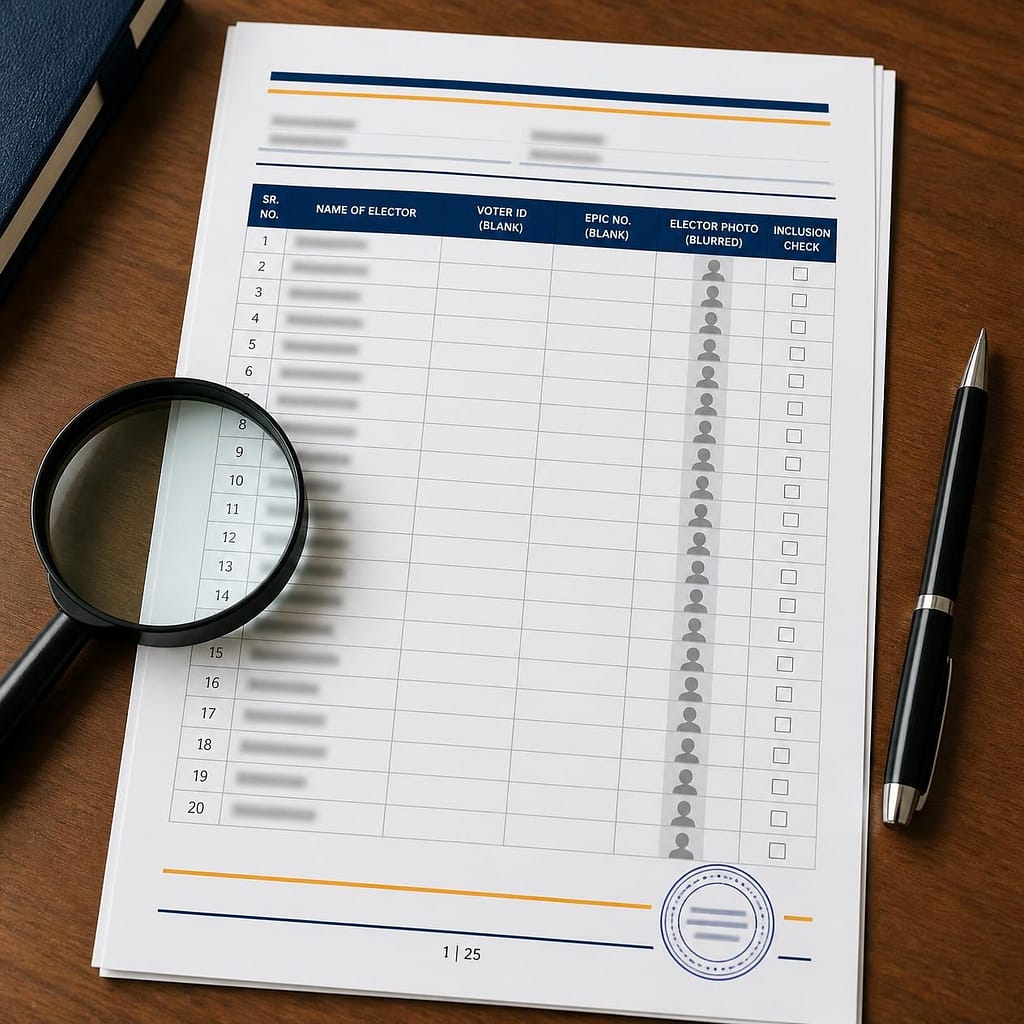
There is a simple truth about elections: the most important decision is not made on voting day. It is made much earlier, when the voter list is prepared.
If a citizen’s name quietly disappears from the list, he cannot vote, however loyal a citizen he is. If names are added without proper checks, the balance can shift without a single vote being stolen at the booth. That is why the power to add and delete voters must rest with a truly independent Election Commission that answers to the Constitution, not to any government or party.
The Commission has three members precisely so that no single person can control the country’s elections. When two of those three repeatedly put their disagreements in writing, the system’s internal safeguards are clearly being tested. If a Chief Election Commissioner were to override his own colleagues and act, directly or indirectly, in the interest of the government of the day, the independence promised by the Constitution would survive only on paper. The voter list would effectively be shaped by those in power, and a one-party system would no longer be a distant fear. It would become a real possibility.
When elections remain but choice disappears
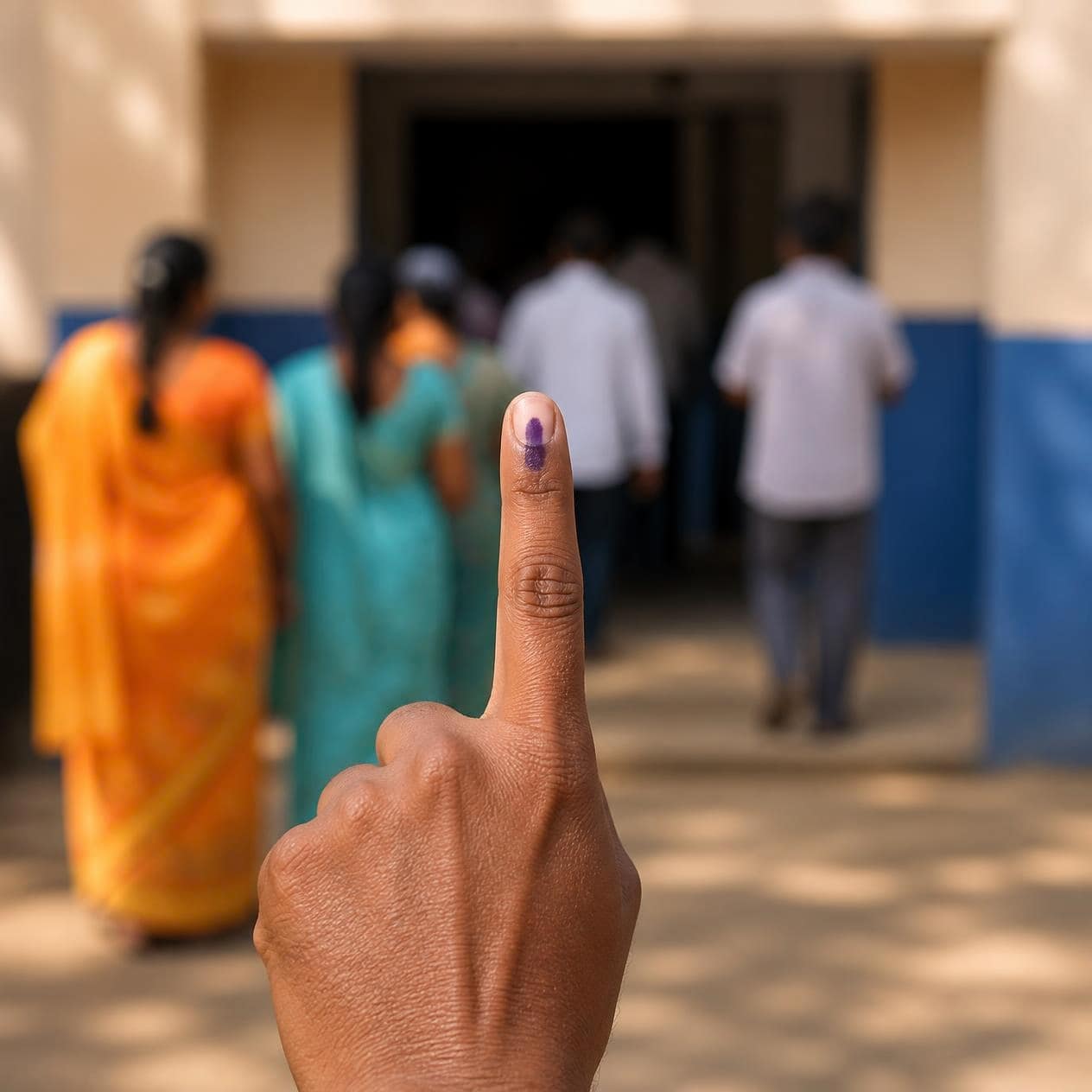
Democracies rarely die in a single day. They fade slowly. Elections continue on schedule. Voters still stand in long queues. Results are still announced on television. But if the umpire is not trusted and the voter list can be shaped without explanation, elections become a ritual instead of a real choice. The outcome is decided before the first vote is cast.
Russia is often given as an example: it holds regular elections, yet critics worldwide say power never truly changes hands. Political scientists call such systems “electoral autocracies”: countries where multiparty elections take place, but free expression, free association and fair competition are judged insufficient.
It is painful to write, but international researchers already place India in this category. The 2026 report of Sweden’s V-Dem Institute ranks India 106th out of 179 countries on its Electoral Democracy Index and classifies it as an electoral autocracy. India’s score of 0.38 is lower than the 0.39 recorded in 1975, the year of the Emergency. The report points to declining media freedom, pressure on civil society and opposition parties, and weaker legislative oversight. The Economist Intelligence Unit, using a different method, calls India a “flawed democracy.”
The Indian government has rejected such rankings, arguing that foreign institutions judge India unfairly. No index is perfect, and that debate is legitimate. But when respected researchers raise the same alarm year after year, and members of our own Election Commission put objections in writing, we must at least ask the question honestly.
“One Nation, One Election” or “One Nation, One Party”?
The government presents its proposal for simultaneous Lok Sabha and state elections as a way to save money and let governments focus on governance. Supporters see it as a practical reform.
Critics fear it could let national issues and one dominant party overshadow state-level choices, weakening India’s federal diversity. In an atmosphere where trust in the Election Commission is already shaken, some ask whether “One Nation, One Election” could slowly become “One Nation, One Party”: not by abolishing democracy, but by emptying it from the inside. That is not the proposal’s stated aim, but the fear deserves open national debate, not silence.
India is not there yet
India is not Russia. In 2024, the ruling party lost its single-party majority in the Lok Sabha and had to depend on coalition partners. Karnataka and other states have voted out ruling governments. Opposition parties govern several states. The Indian voter’s voice still matters.
India also knows what a trusted Election Commission looks like. In the 1990s, T.N. Seshan made the Commission so respected for its neutrality that politicians of every party feared its decisions. Its strength came not from power, but from people’s belief that it favoured no one. That belief was built over decades. It can be lost in a few years.
What must happen now
The answer is not street protests or name-calling. It is transparency. The Commission should publish clear data on voter additions and deletions, make the internal objections and the reasons for rejecting them public, and allow Parliament to debate the matter fully. The method of appointing election commissioners should also be reviewed so that the umpire is chosen in a way every team can trust.
The Commission says its decisions were fair and unanimous. If so, the simplest answer is to show it and let the people judge.
A family survives when its head is fair and seen to be fair. A democracy survives the same way. If we allow the umpire’s neutrality to fade, one day we may still have elections but no real choice. Democracy will live only in the pages of our Constitution, while the people live under a system that no longer listens to them.
That day has not come. India’s voters still have the power to prevent it. But power that is not protected is slowly lost. The time to demand a fair and trusted Election Commission is now, while our vote still speaks.
The views expressed are the author’s own.
Sources: The Indian Express investigation (September 23, 2026); Election Commission of India press statement (September 23, 2026); V-Dem Institute, Democracy Report 2026; Economist Intelligence Unit Democracy Index; The Week, ThePrint, Outlook, The Tribune, Deccan Herald reports.