


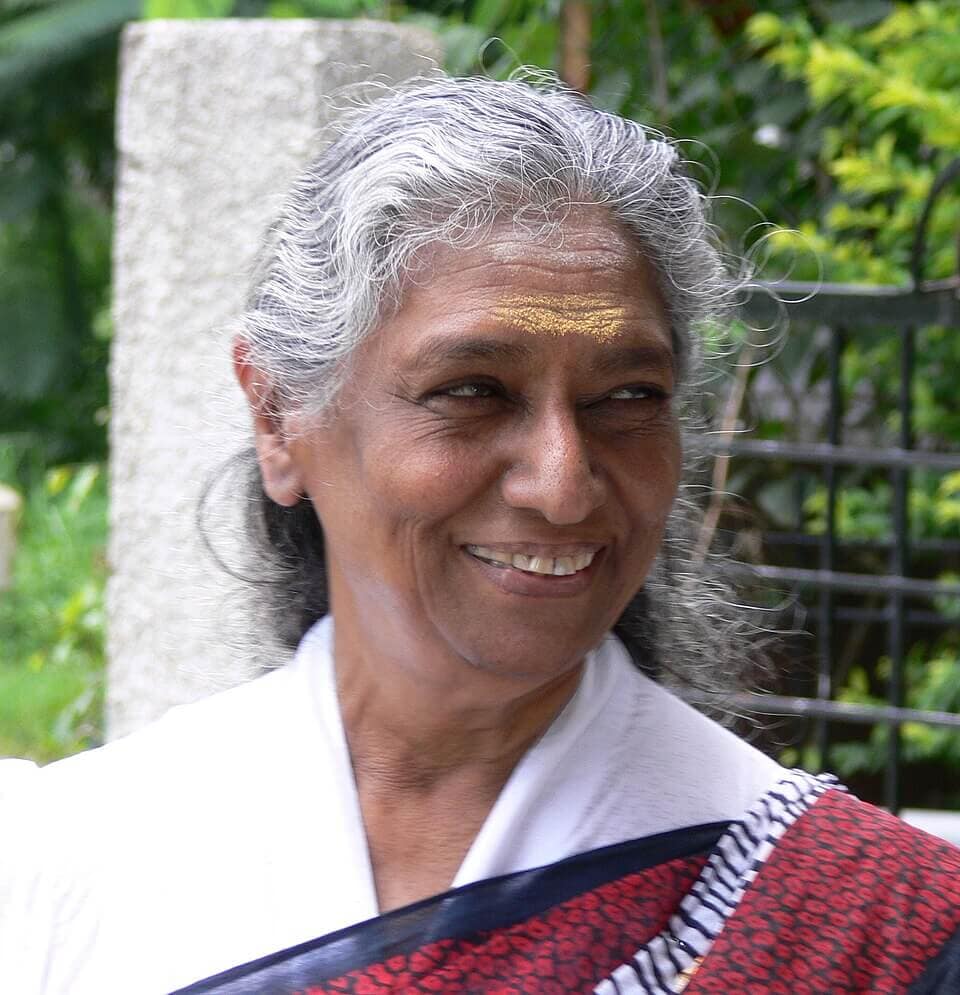
The world of Indian cinema is often defined by its bright lights, roaring applause, and relentless pursuit of fame. Yet, one of its greatest musical titans, legendary playback singer S. Janaki, chose a path that completely redefined what it means to be a superstar.
Janaki Amma—as she was affectionately known to millions—left behind an unparalleled musical legacy of over 48,000 songs recorded across 17 languages. However, her life behind the microphone tells an equally extraordinary story of humility, deep family ties, and a profound personal spiritual journey that culminated in her quiet final years in Mysuru before her passing on July 11, 2026, at the age of 88.
A Private Legacy: S. Janaki’s Family Ties
While S. Janaki’s voice resonated in every household across South India, she kept her personal life fiercely guarded and intensely grounded.
- Her Only Son: Janaki had no daughters. She shared a deep bond with her only son, V. Murali Krishna, an accomplished guitarist and audio business entrepreneur who sadly passed away in early 2026.
- A Family Shielded from the Spotlight: Following her son’s passing, her surviving family members have chosen to stay entirely away from the public eye. They intentionally avoid the limelight, choosing instead to lead quiet, private lives while focusing on preserving the singer’s vast heritage with absolute dignity.
Why the “Nightingale of the South” Chose a Lonely, Quiet Life
It is rare for an icon who received standard-setting standing ovations to completely walk away from the glamour of big-city life in Chennai or Hyderabad. Yet, following her official retirement from playback singing in 2017, S. Janaki chose a remarkably simple, independent life in a modest rented house in the Bogadi area of Mysuru.
This choice was neither an accident nor a sign of abandonment; it was a deliberate embrace of peace:
- An Intentional Exit: Upon her retirement, Janaki candidly expressed that she had sung enough for a lifetime. She harbored zero desire to linger in the spotlight or be treated like a detached deity.
- Finding Sanctuary in Mysuru: She fell in love with Mysuru’s calm weather, gentle pace, and deep cultural roots. The city offered her a quiet sanctuary to exist simply as “Janaki” rather than a legendary celebrity.
- Surrounded by Genuine Love: Though her family resided in other major cities, she was never truly lonely. A devoted circle of caretakers, close neighborhood friends, and lifelong fans ensured her daily needs and health were managed with maternal affection rather than professional obligation.
Inside S. Janaki’s Deep Spiritual Journey
To understand S. Janaki’s twilight years, one must understand her profound spiritual transformation. She never viewed her versatile, multi-octave voice as a tool for material success; she viewed it as a temporary divine loan.
1. Devotion to Lord Krishna and Sai Baba
Janaki’s life was anchored by an unwavering faith in Lord Krishna and Shirdi Sai Baba. This deep-seated Bhakti naturally overflowed into her vast body of non-film work. She recorded countless iconic devotional albums and songs dedicated to Meera, viewing these recording sessions not as work, but as a pure form of musical meditation.
2. A Thirty-Year Vow of Renunciation
The definitive turning point in her personal life came in 1997 with the sudden passing of her husband, V. Ramprasad, who had protected her from the commercial, cutthroat side of the music industry. Following his death, Janaki took a strict, lifelong spiritual vow. She permanently surrendered all ornate jewelry and sarees featuring colored or gold borders. For nearly three decades, she wore only plain, borderless white or solid sarees—a quiet visual testament to her inner detachment from material worldly goods.
3. Rejection of Worldly Titles
Her detachment became publicly evident in 2013 when she famously declined the prestigious Padma Bhushan award from the Indian government. While media houses speculated on political grievances, those closest to her knew the truth: her spirit had evolved past the need for earthly validations, trophies, or political decorations.
4. Healing Through Music and Seva
In her quiet Mysuru home, spirituality was expressed through selfless service. Her daily life revolved around her students. Even when facing age-related physical frailties, her home was filled with the rhythmic beauty of Purandara Dasa Kritis (devotional compositions). Music was her medicine; it kept her entirely resilient, joyful, and free of bitterness until her final breath.
Conclusion: The True Mark of a Legend
S. Janaki’s transition from a powerhouse recording artist to a meditative soul in Mysuru reminds us of a beautiful truth: the ultimate goal of a successful life is to find peace within oneself when the curtains finally fall. She gave everything she had to Indian music, and when the song was over, she slipped away quietly into the silence of her own spirituality—leaving behind a blueprint of grace, humility, and timeless dignity.