


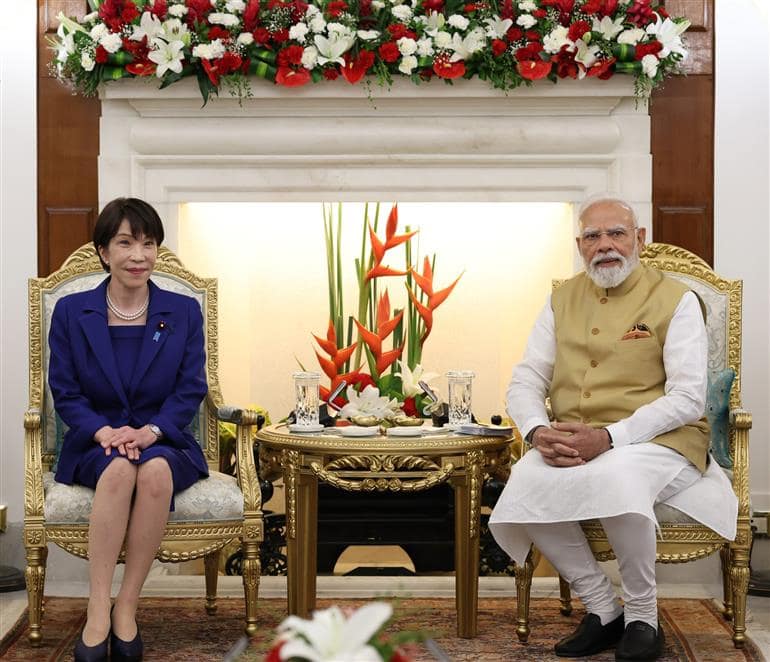
New Delhi, July 2, 2026 — At the 16th India-Japan Annual Summit in New Delhi, Prime Minister Narendra Modi and his Japanese counterpart Sanae Takaichi put a hard number on the future of one of Asia’s most important economic partnerships: ¥10 trillion yen — roughly $68 billion, or close to ₹6 lakh crore — in Japanese investment into India over the next ten years.
It’s an ambitious target, and one that touches nearly every corner of India’s growth story: manufacturing, semiconductors, clean energy, startups, and jobs.
The Numbers Behind the Headline
Speaking at a joint press conference after the summit, Modi said the India-Japan investment partnership was already gaining real momentum. Over the past year alone, the two countries signed 120 new business agreements, bringing roughly $10 billion in committed Japanese investment into India. Building on that, Modi laid out the bigger goal: mobilising ¥10 trillion from Japan over the coming decade, while also doubling the number of Japanese companies operating in India.
Takaichi, for her part, highlighted that the visiting Japanese business delegation — over 150 companies strong — had signed around 120 cooperation documents during this trip alone, including commitments worth roughly ¥2 trillion (about $12.5 billion), part of the broader push toward the ten-year target first set during Modi’s Tokyo visit last year.
Why This Matters for India’s Economy
This isn’t just a diplomatic pledge — it’s meant to translate into concrete outcomes across several sectors:
Manufacturing & “Make in India” Continued reforms have improved India’s ease of doing business, something Modi specifically flagged as a draw for Japanese companies looking to expand their manufacturing footprint in the country. More Japanese firms setting up or scaling operations in India means more local production, supply chains, and ancillary industries.
Semiconductors and Critical Technology Both countries unveiled a joint roadmap to deepen cooperation in semiconductors, quantum technology, and advanced materials — areas India has been aggressively courting global investment in as it tries to build a domestic chip ecosystem. Supply chain resilience in these strategic sectors was a specific focus of the summit talks.
Clean Energy and Jobs The two leaders also announced cooperation on battery technology, green hydrogen, and nuclear energy, framed as a joint contribution to the world’s clean energy transition. India’s large land base and solar potential make it a natural manufacturing and production hub for these technologies — backed by Japanese capital and technical know-how.
Startups and Innovation With more Japanese companies expected to double their India presence, the investment push is also likely to ripple into India’s startup ecosystem — particularly in deep tech, clean energy, and advanced manufacturing, sectors where Japanese firms bring both funding and technology partnerships that Indian startups have historically found harder to access domestically.
Energy Security Beyond investment figures, the two countries also agreed on a roadmap for energy security, including new initiatives on energy resilience aimed at cushioning against shocks like oil price volatility — a sign that the partnership goes beyond factories and capital flows into broader economic stability.
The Bigger Picture
This investment target builds on the Japan-India Joint Vision for the Next Decade, first announced during Modi’s visit to Tokyo in August last year, and reflects Japan’s broader strategy of treating India as a trusted partner in economic security — not just a market, but a hedge against global supply chain disruption. Bilateral trade, currently around $27.5 billion, is also expected to be pushed higher as part of this expanded relationship.
Officials from both sides have been careful to frame this chapter of the India-Japan relationship as being driven primarily by economics rather than traditional security cooperation — though defence ties, including discussions on radar technology for Indian warships, remain part of the broader conversation.
What Comes Next
With the summit concluded, the real test will be how quickly the ¥10 trillion commitment converts into actual projects on the ground — new factories, R&D centers, energy plants, and jobs across Indian states. If momentum from the past year (120 agreements, $10 billion committed) is any indication, this decade-long investment push could meaningfully reshape India’s manufacturing and tech landscape — provided execution keeps pace with ambition.