


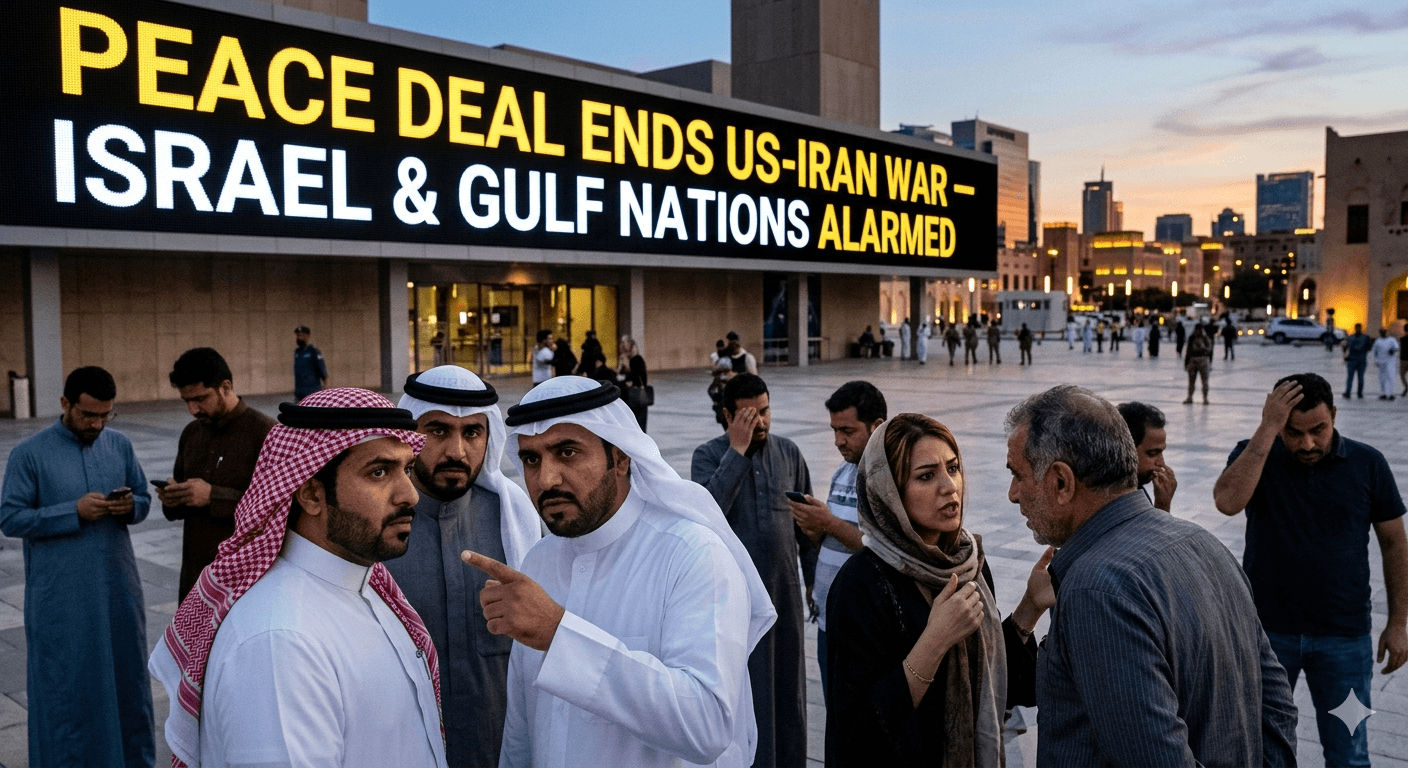
The war is over, but a new US-Iran peace deal has Israel and Gulf nations worried about Iran’s growing power in the region.
The United States and Iran have signed a major peace deal, marking the first such agreement between leaders of both countries since 1979. President Donald Trump and Iran’s President Masoud Pezeshkian signed the deal this week, ending a war that had lasted three months.
But while the fighting has stopped, the deal is creating a new kind of unease — not over violence, but over power. Israel and several Gulf nations worry the agreement leaves Iran stronger, more accepted internationally, and more influential across the region, while their own security concerns remain unresolved.
The deal was signed in France, during the G7 summit — a location seen as symbolic of new beginnings after conflict.
What the deal does
The agreement has 14 points and extends the ceasefire by 60 days, giving both sides time to negotiate a lasting peace. This includes Lebanon, and also covers Iran’s nuclear program.
The war began on February 28, when the US and Israel launched strikes that killed Iran’s 86-year-old Supreme Leader and other top officials. The conflict that followed killed more than 7,000 people, mostly in Iran and Lebanon, and caused energy prices to rise sharply.
Why some are happy
Supporters call it the “deal of the century.” A Lebanese commentator said Iran cannot survive more economic pressure, and that Trump has no interest in restarting the war, making the deal likely to succeed.
For Iran, the outcome looks strong: an end to fighting, gradual removal of sanctions, return of oil exports, and money for rebuilding — along with quiet international acceptance of its government.
Why others are worried
Not everyone sees it this way. The US and Israel had originally hoped to weaken Iran’s government, stop its nuclear program, and reduce its power in the region — none of which the deal fully achieves.
An Israeli analyst was blunt about it, calling the deal a strategic disaster, since the campaign meant to weaken Iran’s leadership ended up giving it more recognition from the US instead.
He added that the deal gives Israel none of what it wanted — no limits on Iran’s missiles or allied groups, and no real plan to dismantle its nuclear sites.
Gulf nations feel left out
Gulf countries are especially uneasy. They had little say in the war’s outcome but now have to deal with its effects. The deal is already shaking their trust in US protection and pushing them to consider working more closely with Iran instead of opposing it.
Still, not all experts see this as bad news. One Iran expert said the deal isn’t a defeat — it’s simply the most realistic option left after years of pressure tactics failed to change Iran’s behavior.
What happens now
With the 60-day ceasefire extension in place, attention now shifts to the harder negotiations ahead — especially around Iran’s nuclear program, which remains unresolved even though the war itself has ended.
Source: Reuters