


June 18, 2026 | World News
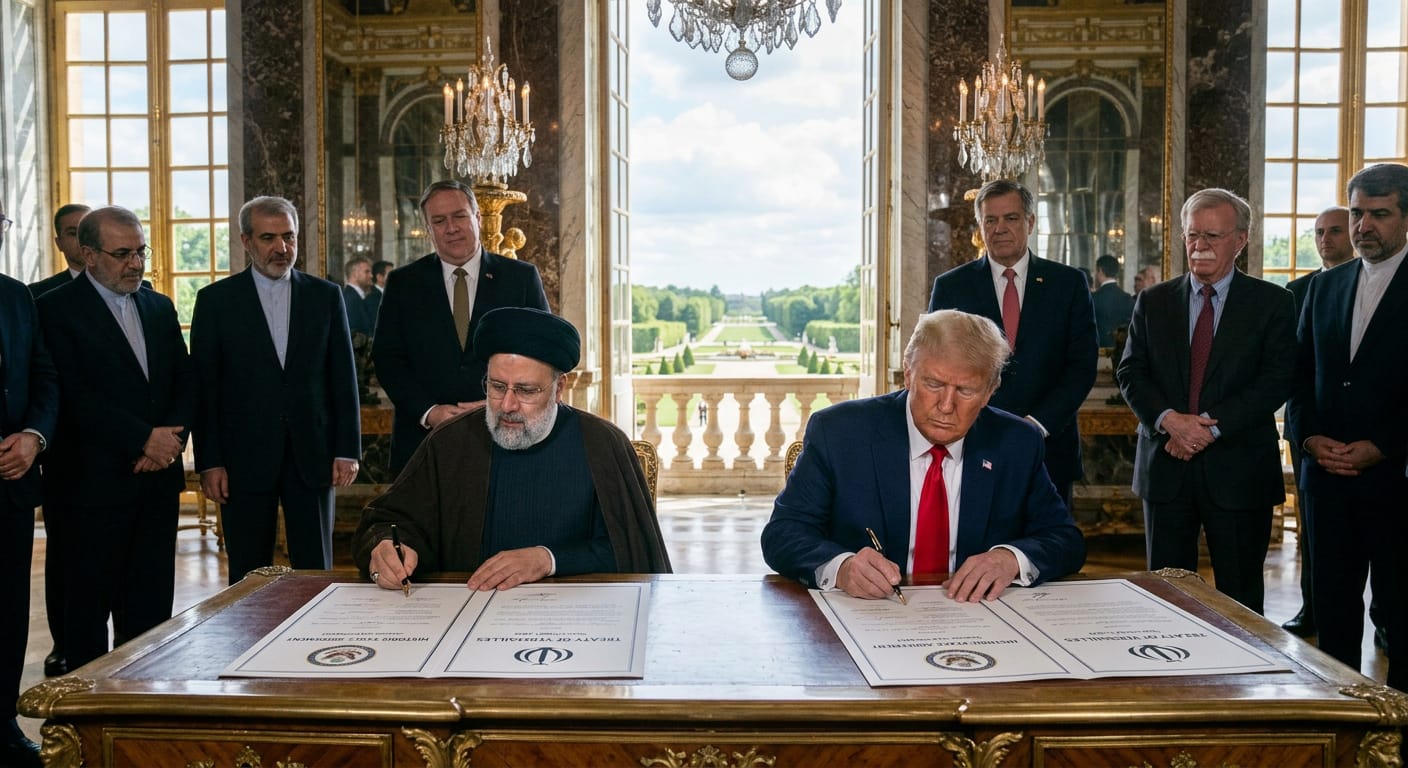
US President Donald Trump and Iranian President Masoud Pezeshkian signed a landmark memorandum of understanding on Wednesday, marking the first major diplomatic breakthrough in the months-long conflict between the United States and the Islamic Republic of Iran.
The agreement — officially known as the Islamabad Understanding — was signed at the Palace of Versailles in France and takes effect immediately.
What the Deal Covers
The preliminary agreement establishes a 60-day framework with several key provisions:
Ceasefire Extension: Both nations have agreed to extend their existing ceasefire for another 60 days, during which they will work toward a comprehensive and permanent peace settlement.
Strait of Hormuz Reopened: Iran will reopen the strategically vital Strait of Hormuz, through which roughly one-fifth of the world’s oil and liquefied natural gas exports normally flow. Commercial vessels will face no transit charges during the 60-day period, though Iranian officials have signalled the waterway may not return entirely to its pre-war operating framework once the initial phase concludes.
Nuclear Negotiations: The deal sets a 60-day negotiation window — extendable by mutual consent — to reach a broader agreement on nuclear safeguards. Iran reaffirmed that it will not pursue or develop nuclear weapons, and its enriched uranium stockpiles will be diluted under supervision of the International Atomic Energy Agency (IAEA). This marks a compromise from Washington’s earlier position that all enriched material be removed from Iranian soil.
Sanctions Relief: The United States has agreed in principle to lift all sanctions against Iran as part of a final settlement, though specific implementation details remain to be negotiated.
Reconstruction Package: The memorandum outlines a proposed $300 billion reconstruction and development initiative to support Iran’s post-war economic recovery.
How the Signing Unfolded
The ceremony took place shortly before a G7 state dinner hosted by French President Emmanuel Macron in the palace’s historic halls. White House footage showed Trump signing Persian-language documents before handing the pen to Secretary of State Marco Rubio, who passed it to the Iranian delegation. Those in the room applauded the moment.
Iran’s foreign ministry confirmed that President Pezeshkian signed the agreement digitally shortly after.
Pakistan’s Prime Minister Shehbaz Sharif, who served as a key intermediary throughout months of indirect negotiations, announced the agreement had entered into force with “immediate effect.”
Background: How the Conflict Began
Tensions escalated rapidly following the assassination of Iranian Supreme Leader Ayatollah Ali Khamenei and several senior military commanders on February 28 — an event that reshaped the geopolitical and economic landscape of the Middle East. Iran’s subsequent closure of the Strait of Hormuz sent oil prices sharply higher and triggered concerns about a broader global inflation crisis, disrupting energy supply chains, fertilizer markets, and international trade.
Global Reaction
French President Emmanuel Macron described the signing as one of the most significant diplomatic achievements of the year, bringing together two nations that have remained adversaries for decades.
Trump defended the agreement at the G7 summit, framing it in economic terms: “I didn’t want to see economic catastrophe. If this conflict continued, the consequences for the world economy could have been enormous.” He noted that global markets responded positively each time peace prospects improved — and indeed, oil prices dipped modestly following the announcement, though they remain well above pre-war levels.
Iranian parliamentary speaker and chief negotiator Mohammad Bagher Ghalibaf welcomed the deal but struck a cautious tone. “Our distrust of the United States remains,” he told Iranian state media, warning that Iran would “speak the language of power” if negotiations ultimately fail.
Unresolved Issues
Not all questions have been settled. The agreement calls for a full cessation of hostilities across all fronts, including Lebanon — but implementation remains uncertain. Israel has indicated it does not currently plan to withdraw forces from Lebanese territory and has continued operations against Hezbollah since the announcement. Trump acknowledged the concern and said he had urged Israeli Prime Minister Benjamin Netanyahu to exercise greater restraint going forward.
Meanwhile, US officials were quick to clarify that Iran will not receive automatic access to frozen assets or the reconstruction package simply by signing the memorandum — those benefits remain tied to the outcome of ongoing negotiations.
Related: Iran hails MoU as diplomatic victory | US VP Vance says Israel operations complicated Iran deal | Nearly 4,000 killed in Lebanon since Israel-Hezbollah fighting began