


India and Belgium have agreed to significantly deepen their strategic partnership, with new commitments spanning defence co-production, critical minerals, semiconductors, clean energy and trade — as the two countries set an ambitious goal to double bilateral trade within five years.
What Happened
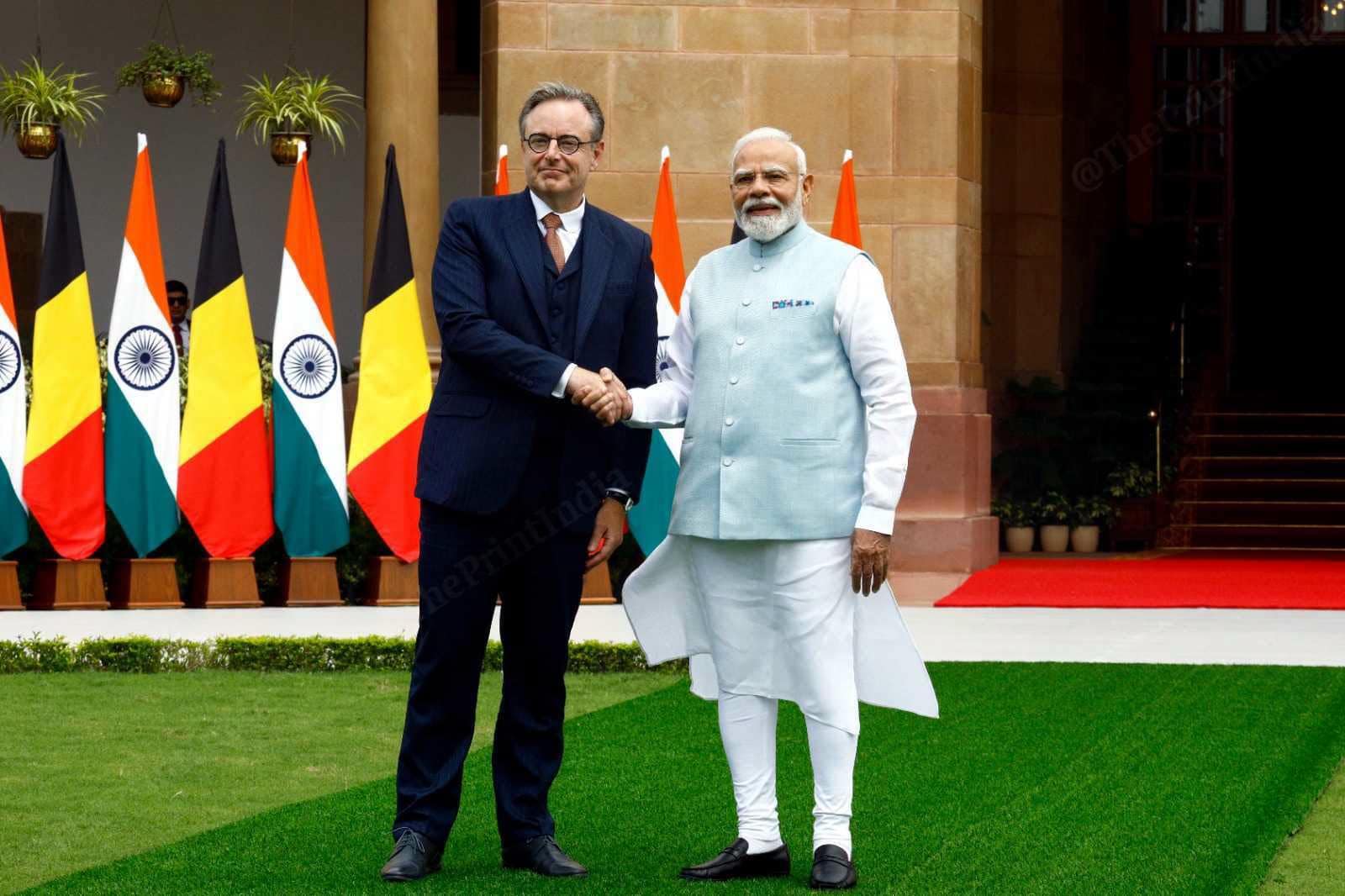
Prime Minister Narendra Modi held wide-ranging talks with Belgian Prime Minister Bart De Wever at Hyderabad House in New Delhi, as De Wever wrapped up a three-day official visit to India — his first since taking office. The two leaders reviewed the full spectrum of India-Belgium relations, covering defence and security, trade and investment, semiconductors, fintech, critical minerals, renewable energy, connectivity, and academic cooperation.
Modi described the visit as building on real momentum: it follows a Belgian Economic Mission led by Princess Astrid in March 2025, during which around 40 memoranda of understanding were signed, and the inaugural India-Belgium Strategic Dialogue held in July 2026. This latest meeting was framed as the moment to convert that groundwork into concrete outcomes.
The Big Numbers Target: Doubling Trade in Five Years
Perhaps the headline economic outcome is the two countries’ commitment to double bilateral trade within the next five years. To support that goal, India will establish an Investment Fast-Track Mechanism to make it easier for Belgian companies to invest in India, and the India-Belgium Business Forum will become a regular fixture to keep both sides coordinated on financial, fintech, and regulatory cooperation.
De Wever separately called the recently concluded India-EU free trade pact a major milestone, describing the New Delhi-Brussels relationship as broader and more strategic than it has ever been.
Defence: From Tanks to Intelligence Sharing
Defence emerged as what Modi called a “key pillar” of the relationship. Specific commitments include:
- Joint work on modern defence equipment, including India’s Zorawar light tank program
- Expanded military exchanges and training between the two countries
- Government and defence-industry agreements aimed at co-development and co-production of defence technology, rather than India simply buying finished equipment
- Stronger intelligence sharing between agencies, specifically to combat crime and terrorism
This marks a shift from a purely transactional buyer-seller defence relationship toward genuine joint development — a pattern India has been pursuing with several strategic partners as it works to build up domestic defence manufacturing capacity.
Why Critical Minerals Are a Big Deal
Both countries agreed to increase cooperation in the processing and recycling of critical minerals — the raw materials (like lithium, cobalt, and rare earth elements) that go into everything from electric vehicle batteries to defence electronics to renewable energy equipment.
This matters more than it might sound at first. Countries around the world are racing to secure reliable, non-China-dependent supply chains for these minerals, since a handful of nations currently dominate global processing capacity. By partnering with Belgium — home to significant chemical and materials-processing expertise — India is positioning itself to build out its own processing and recycling capabilities, rather than remaining dependent on raw mineral imports alone.
Semiconductors: Belgium’s Expertise Meets India’s Scale
On semiconductors, Modi put the logic simply: “Belgium’s expertise and India’s scale are complementary to each other.”
The centerpiece of this cooperation is a plan to connect Belgium’s imec institute — one of the world’s leading semiconductor and nanotechnology research centers — with India’s fast-growing semiconductor ecosystem. India has been aggressively building out chip manufacturing and design capacity in recent years as part of its broader push to become a serious player in global electronics supply chains; partnering with a research powerhouse like imec gives India access to advanced R&D expertise it doesn’t yet have at home, while Belgium gains a foothold in one of the world’s largest growing electronics and manufacturing markets.
Clean Energy and a Notable Green Ammonia Project
The two countries signed a Memorandum of Understanding on renewable energy, which Modi said would give new momentum to sustainability cooperation between the countries. He specifically highlighted an ongoing joint project to develop one of the world’s largest green ammonia facilities at Kakinada, Andhra Pradesh — green ammonia being a cleaner alternative to conventional ammonia production, which is traditionally a heavily polluting industrial process, and a key input for both fertilizers and emerging clean fuel technologies.
A Historical Note
Modi also pointed to the deeper roots of the relationship, referencing the sacrifice of thousands of Indian soldiers who fought in Belgium during the First World War, and Belgium’s long-standing connection to India through the diamond trade — De Wever himself has a long association with Antwerp’s Indian community from his years as the city’s mayor. Modi framed the visit as an effort to transform that historic, largely trade-based connection into a fuller strategic partnership.
The Bigger Picture
Coming shortly after India reported 7.8% GDP growth for the April-June quarter — a figure Modi referenced directly in his remarks, calling India’s economic rise a source of confidence and opportunity for the world — this visit fits into a broader pattern: India is actively courting technologically advanced European partners to plug gaps in its manufacturing and innovation ecosystem, particularly in defence, semiconductors, and clean energy, sectors where it wants to reduce reliance on any single external partner.
For Belgium, the deal offers deeper access to one of the world’s largest and fastest-growing consumer and industrial markets, at a moment when European countries are increasingly looking to diversify trade relationships beyond their traditional partners.
The bottom line: this isn’t just a diplomatic photo opportunity — it’s a structured attempt to build durable, multi-sector cooperation in some of the most strategically important industries of the next decade.
This article is based on official statements from Prime Minister Narendra Modi, Belgian Prime Minister Bart De Wever, and reporting from PTI and other news agencies.