


State health officials investigating skin complaints near Hosur facility, even after pollution board dropped its own inquiry
A health authority in India’s Tamil Nadu state is investigating claims that wastewater from a Tata Electronics factory — which makes components for Apple’s iPhones — has contaminated nearby farmland and sickened local farmers, according to officials familiar with the matter.
What’s happening
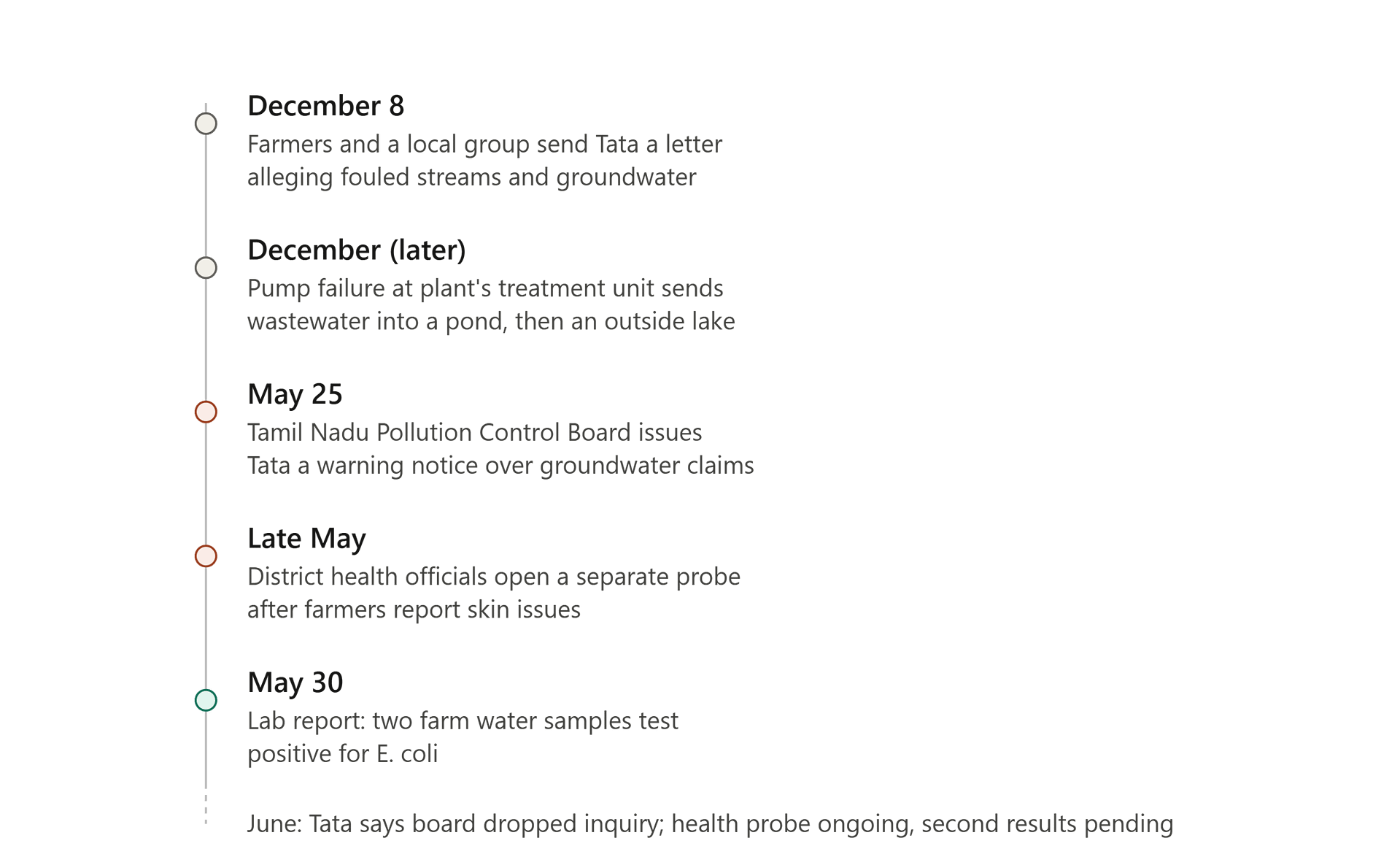
The Tata Electronics facility in Hosur, southern Tamil Nadu, has been at the center of a months-long environmental dispute that’s now becoming a test case for India’s broader ambitions to become a major iPhone manufacturing hub. The plant, which opened in 2021 and produces iPhone back covers and other components, was issued a warning notice by the state pollution control board in late May over allegations that wastewater discharge had contaminated groundwater on neighboring farms.
Tata has pushed back on the allegations. The company said this week that the pollution board reviewed new water samples collected from inside the facility and found no signs of contamination, and that the board had subsequently dropped its scrutiny of the matter.
But that hasn’t ended the controversy. A separate investigation by district health officials has been quietly running since late May, triggered by complaints from farmers who say skin problems developed after exposure to water near the plant. Two water samples taken from nearby farms were sent to a state laboratory and tested positive for E. coli — a bacteria associated with sewage contamination — according to a lab report dated May 30. A second round of test results is still pending. Health officials have said that while they’ve received complaints, no cases of related illness have yet been clinically confirmed.
Farmers describe damaged land
Farmers in the area say the contamination has gone beyond drinking water, affecting their ability to grow crops. Some described land that had become unusable for cultivation, with seeds sprouting briefly before dying. Visits to the site found discolored water in wells and ponds near the facility, though the source and exact cause of that discoloration hasn’t been independently confirmed.
The dispute traces back further than this spring: farmers and a local advocacy group reportedly first raised concerns about fouled streams and groundwater in a letter sent in December. It’s unclear whether Tata responded to that letter at the time. Separately, a person familiar with plant operations said a pump failure at the facility’s water treatment unit in December caused some treated wastewater to overflow into a nearby pond and, eventually, an outside lake — an incident Tata says it addressed quickly by repairing the pump.
Tensions around the site have occasionally spilled into confrontation. During one recent visit, a member of the farmers’ group crossed onto factory property to photograph what they alleged was a wastewater pond, prompting a security guard to retrieve a firearm — though no shots were fired and the situation de-escalated.
Why it matters
The episode puts new scrutiny on Apple’s supply chain in India, where the company has been steadily shifting manufacturing away from China. Apple’s supplier code of conduct requires partner factories to control and monitor wastewater discharge and prevent contamination of stormwater runoff. Neither Apple nor Tata has publicly responded in detail to the specific health-related findings.
What’s next
The health investigation remains open, with a second set of lab results still awaited. How Tamil Nadu authorities respond — and whether Apple weighs in directly — could shape how seriously environmental compliance is enforced as India races to expand its electronics manufacturing footprint.
This article is based on independent reporting and analysis of publicly available coverage of the ongoing investigation in Tamil Nadu, India.