


Bengaluru, 31 October 2026: The Indian Space Research Organisation (ISRO) has successfully placed the NVS-03 navigation satellite in its intended orbit, a step towards strengthening India’s homegrown NavIC system. The satellite was carried by the GSLV-F18 rocket, which lifted off from the Second Launch Pad at the Satish Dhawan Space Centre in Sriharikota.
About the GSLV-F18 / NVS-03 mission
GSLV-F18 was the 20th flight of ISRO’s Geosynchronous Satellite Launch Vehicle. The rocket placed NVS-03 into a Geosynchronous Transfer Orbit (GTO). Launch was scheduled for 11:51 pm IST on 30 October.
NVS-03 is the third satellite in the next-generation NavIC series. It is also the twelfth satellite in the wider IRNSS/NavIC constellation.
What makes NVS-03 different
- Indigenous atomic clock: The satellite carries an Indian-made atomic clock alongside procured ones. Accurate timekeeping is central to satellite navigation, and clock failures have hurt NavIC before.
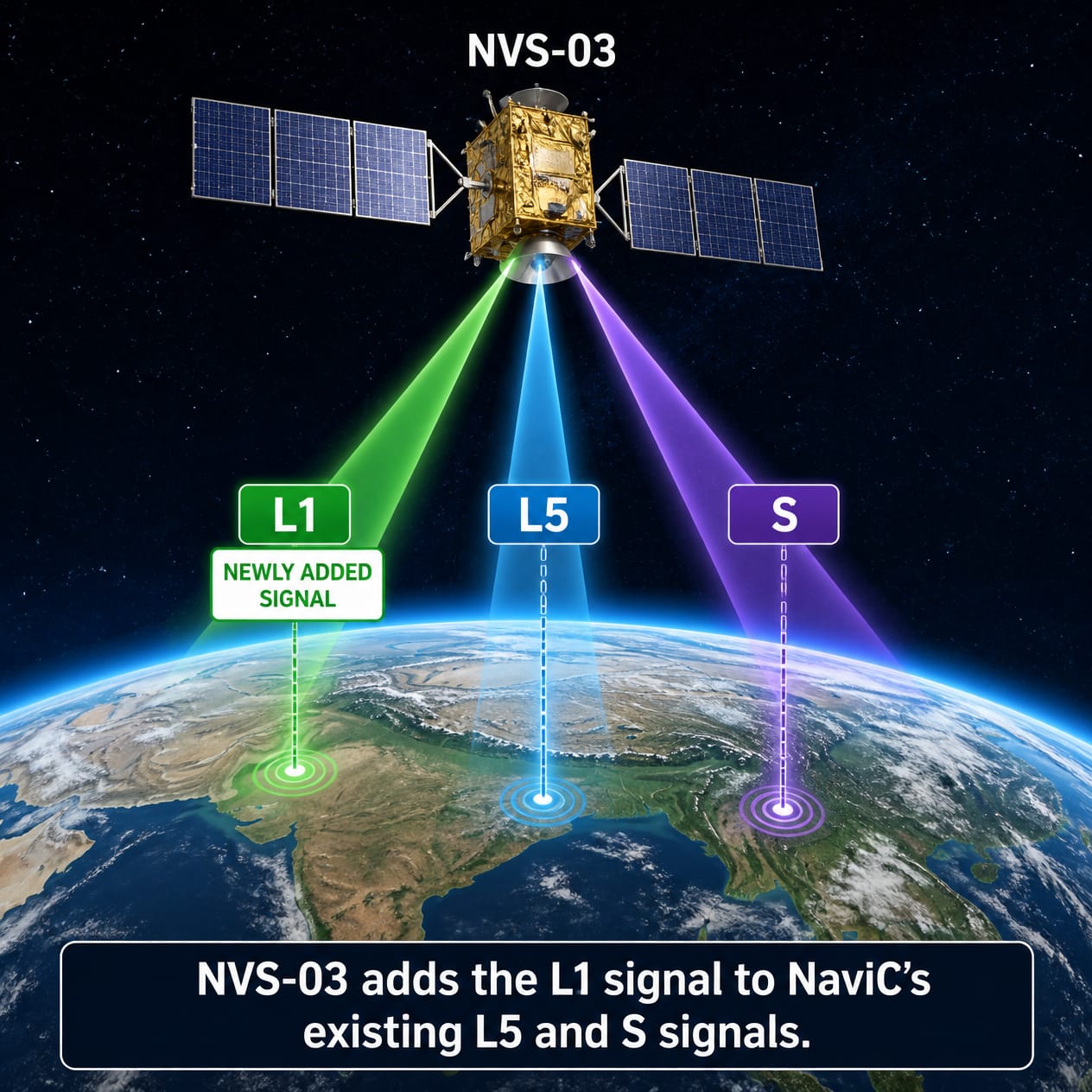
- New L1 signal: NVS-03 adds the L1 signal to the existing L5 and S signals. L1 is widely used in consumer navigation devices, which could make NavIC easier to adopt.
- Regional coverage: The signals cover the Indian land mass and a region extending 1,500 km beyond India’s borders.
Why NavIC needs the boost
NavIC (Navigation with Indian Constellation) is India’s regional answer to the US GPS, Russia’s GLONASS and China’s BeiDou. It has been running below strength. Satellites have stopped working, and atomic clock failures have caused problems.
The setback behind the current push came in January 2025. NVS-02 reached transfer orbit, but a propulsion fault stopped it reaching its designated orbit. The government had also said only three satellites were providing location and timing services.
NVS-03 is one of five planned second-generation satellites, with NVS-04 and NVS-05 expected to follow.
What happens next
Reaching GTO is the first milestone, not the last. The satellite still has to be moved to its final orbit and go through in-orbit tests before it can improve NavIC services. ISRO has not published a timeline for this.
Where NavIC is used
NavIC offers a standard service for the public and a restricted service for the armed forces and authorised agencies. Its uses include vehicle navigation, shipping and maritime work, and defence applications.
FAQs
What is NVS-03?
It is the third satellite in ISRO’s second-generation NavIC series, built to keep India’s navigation services running.
Which rocket launched NVS-03?
The GSLV-F18, the 20th flight of the GSLV, launched from Sriharikota.
Does NavIC work better now?
Not immediately. The satellite must first reach its final orbit and complete testing.
What is the new L1 signal?
It is an extra signal added to NavIC’s existing L5 and S signals. L1 is common in consumer GPS devices.
Source: ISRO mission page for GSLV-F18/NVS-03.