


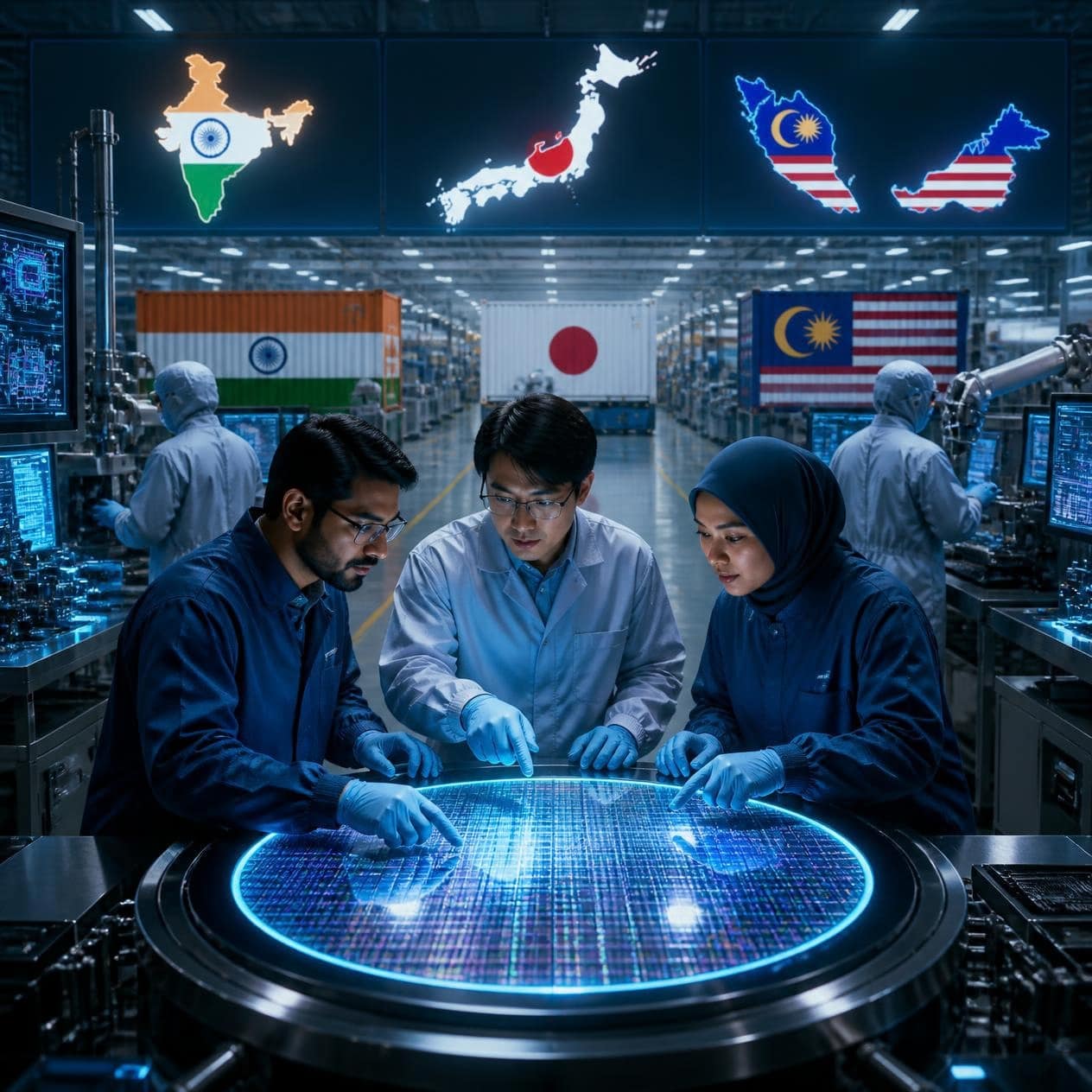
India’s chip ambitions are moving from factory floors under construction to the supply chain that will keep those factories running. On September 18, Tata Electronics announced four collaborations with Japanese and Malaysian companies, covering everything from high-purity chemicals to logistics, equipment installation and packaging components. businesstoday
If you’re wondering why a batch of MoUs matters, this guide explains what was signed and how it fits into India’s semiconductor industry.
Key takeaways
- Tata Electronics signed agreements with Japan’s Sumitomo Chemical, Enomoto, Sojitz and NRS, and with Malaysia’s Kelington. businesstoday
- The deals support two flagship projects: the Dholera fab in Gujarat and the Jagiroad packaging plant in Assam.
- They are part of a wider set of 16 MoUs that Tata Electronics planned to sign at SEMICON India 2026. yourstory
- Most of the announcements are MoUs. They signal intent to build a local supply chain but are not finished supply contracts.
Semiconductor manufacturing, briefly explained
Making a chip takes two broad stages. A fab (fabrication plant) builds circuits on silicon wafers inside ultra-clean rooms. An OSAT (outsourced semiconductor assembly and test) facility then cuts the wafers into chips, packages them and tests them.
A fab also consumes enormous quantities of specialised inputs. These include ultra-pure chemicals, gases, precisely installed process tools and components. This is why the new partnerships matter: a fab can be built on time and still be unable to run without a reliable supply of these inputs.
Tata Electronics’ two big bets
Dholera, Gujarat (fab). The fab is being built with Taiwan’s PSMC providing technology and execution support, and it is designed for up to 50,000 wafers a month. The total investment is up to ₹91,000 crore (about US$11 billion). One recent report says construction has passed the halfway mark, with cleanroom installation and equipment calibration under way and trial production targeted for December 2026. Timelines on projects like this can shift, so treat that date as a target. Tata Group to Build the Nation’s First Fab in Dholera +2
Jagiroad, Assam (OSAT). Tata Electronics is developing a high-volume packaging facility here with an investment of USD 3 billion. businessworld
The new partnerships, one by one
| Partner | Country | Focus | Supports |
|---|---|---|---|
| Sumitomo Chemical | Japan | Semiconductor materials and high-purity chemicals | Dholera fab |
| Kelington | Malaysia | Engineering, infrastructure, tool installation | Dholera fab |
| Enomoto | Japan | Packaging support, lead frames | Jagiroad OSAT |
| Sojitz + NRS | Japan | Materials supply, storage, chemical logistics | Dholera fab |
Sumitomo Chemical: materials for the fab
Under its MoU, Tata Electronics will explore sourcing photoresists, functional chemicals and high-purity chemicals such as hydrogen peroxide, isopropyl alcohol, ammonia water and sulfuric acid. The companies will also explore making some of these materials in India. Local production would reduce dependence on imports for some of the most sensitive inputs. businesstoday
Kelington: getting the fab ready to run
Kelington will support delivery of the critical infrastructure and systems the Dholera fab needs, and the companies will explore developing local talent and design-and-build engineering capability in India. The collaboration covers gas distribution systems, high-purity piping and process tool installation, along with training local partners in specialised skills. Installing tools correctly is a big part of what separates a finished building from a working fab. businesstodaytribuneindia
Enomoto: packaging and lead frames
Enomoto will use its R&D and technical expertise to support packaging readiness at Jagiroad, and the two companies will explore making lead frames locally, along with technology transfer and capability development. A lead frame is the small metal structure that holds a chip and connects it to the outside world. It is a basic packaging component, and making it in India would strengthen the domestic supply chain. businesstoday
Sojitz and NRS: the unglamorous, critical link
Sojitz and NRS will help set up a framework for supplying and storing critical semiconductor materials for Dholera, including products that need specialised handling. Sojitz brings chemical trading and supply-chain expertise, while NRS specialises in chemical logistics and storage. Safe transport and warehousing of hazardous chemicals rarely makes headlines, but a fab stops without it. businesstoday
Why Japan and Malaysia?
Japan has long been a leader in specialty semiconductor materials and precision components, which is the expertise Tata is drawing on here. Malaysia has a deep semiconductor packaging and engineering base, and Kelington brings the process-infrastructure skills a new fab needs. Together they fill gaps that a new entrant can’t close alone. This is general industry context rather than something stated in the announcement.
The bigger picture: an ecosystem, not just a factory
These deals are part of a wider push. Tata Electronics also partnered with INOX Air Products on high-purity gases, and with L&T Semiconductor Technologies to explore manufacturing L&T’s semiconductor products at Tata’s facilities, starting with consumer-grade camera modules. The broader partner list also includes Nexperia and BESI from Europe, and JSR, Fujifilm and Sojitz from Japan. tribuneindiayourstory
The policy backdrop is also active. Headlines from the event point to investment commitments of ₹1 lakh crore under Semicon 2.0, and a target of 200 chip design startups and 1 lakh semiconductor technicians. Tata Electronics’ CEO framed the shift in simple terms. The question is no longer whether India can make chips, but how quickly and deeply it can build the ecosystem around them. businesstodaybusinessworld
What to watch next
- From MoU to contract. Much of the language is about “exploring” supply and localisation. Watch for binding agreements and actual investment in Indian plants.
- Fab timelines. Cleanroom installation and calibration are the hard phases, and trial production is the milestone to track.
- Local manufacturing of materials. Whether chemicals and lead frames are actually made in India will decide how resilient the supply chain becomes.
- Talent. Tool hook-up and fab operations need trained people, which is why training features in several of the deals.
FAQs
What did Tata Electronics announce?
Four collaborations with Japanese and Malaysian companies on materials, logistics, equipment installation and packaging, announced at SEMICON India 2026.
Where are Tata’s semiconductor plants?
The fab is in Dholera, Gujarat. The packaging (OSAT) facility is in Jagiroad, Assam.
What is a lead frame?
A metal component in chip packaging that supports the chip and provides electrical connections. Enomoto and Tata will explore making it in India.
Are these binding deals?
Most are MoUs, which set out intent and areas of cooperation. They usually precede formal commercial agreements.
When will Dholera start producing chips?
Recent reporting cites a trial production target of December 2026, though schedules for new fabs can change.
Conclusion
Announcing a fab is one milestone. Making sure it has chemicals, gases, tools, logistics and packaging components is another, and this week’s announcements focus on that second part. If the MoUs turn into real local supply chains, India’s semiconductor industry will be a step closer to running on its own ecosystem.