


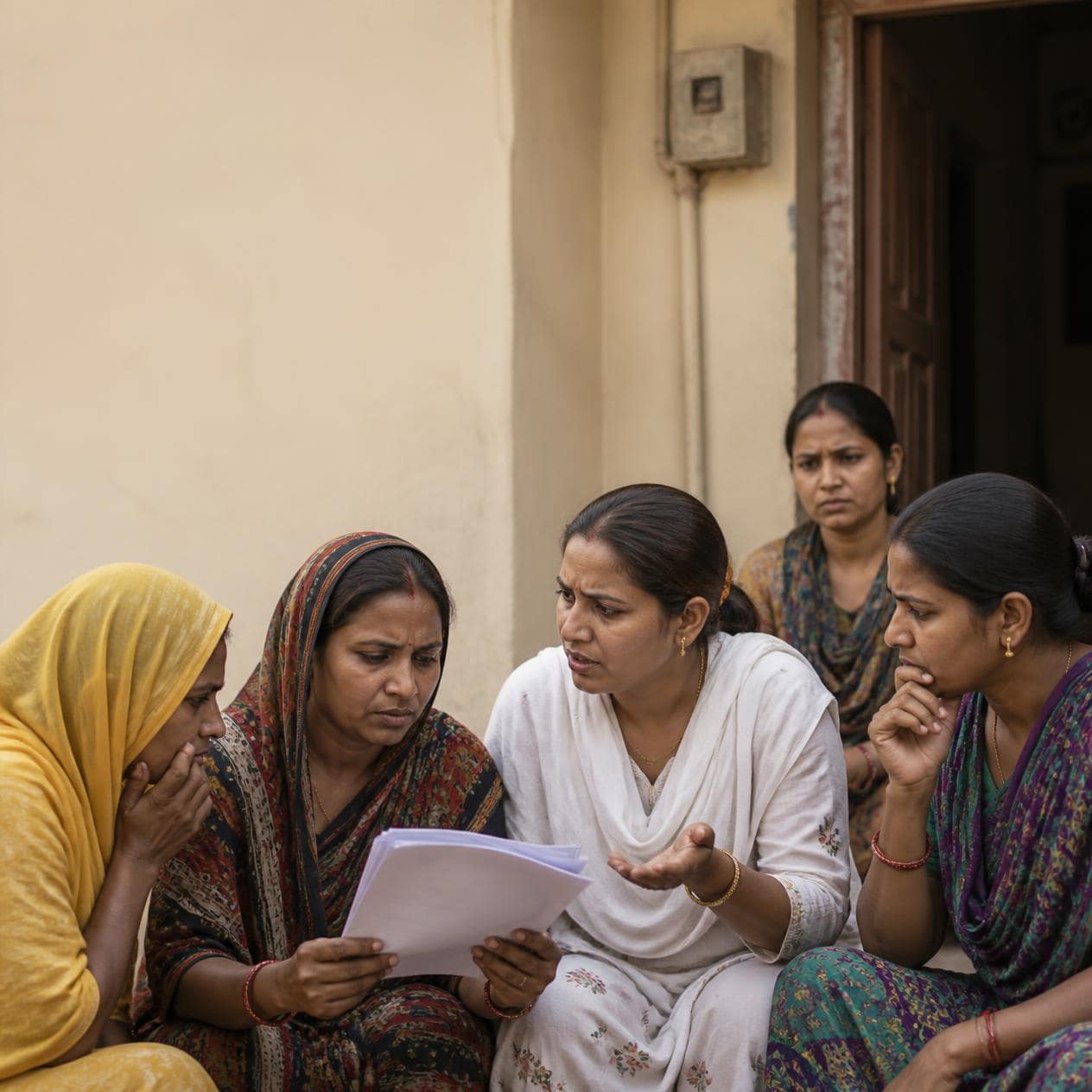
There is a particular kind of pain that comes from realizing, years later, that what happened to you had a name — and a law against it — and no one told you. Not your family, not your school, not the people who were supposed to protect you. Many women in India carry this exact realization: that they were exploited, controlled, or harmed by people close to them, and grew up believing it was simply “how things are,” because they never knew they had a legal right to say no.
This article is for them. Not to relive any one story, but to make sure the next woman who feels that quiet, confusing wrongness in her own home, workplace, or relationship has the one thing so many of us didn’t: the knowledge that the law is already on her side.
Why This Silence Happens
Exploitation of women rarely announces itself as a crime. It arrives dressed as tradition, obedience, “keeping the family together,” or love that comes with conditions. A girl raised to believe that questioning elders is disrespect, or that a husband’s control is normal, has no reason to suspect that what she’s living through has a legal remedy — until, often, it’s too late to act on it in the moment. Awareness, not just law, is the missing piece. As the National Commission for Women itself has acknowledged, India already has strong legislation protecting women — the real gap is that most women don’t know these laws exist or how to use them.
Here is what every woman — young, married, single, working, at home — deserves to know.
1. Violence and Control at Home
The Protection of Women from Domestic Violence Act, 2005 is one of the most powerful — and most underused — laws in India. It doesn’t just cover physical beating. It legally recognizes emotional, verbal, sexual, and economic abuse as domestic violence too. That means being controlled financially, humiliated verbally, threatened, or coerced by a husband or his family is not “just how marriage is” — it is abuse the law defines and punishes.
Crucially, this law gives a woman the right to stay in her shared household, even if she doesn’t own it, and she can approach a Protection Officer or the police to seek a protection order, monetary relief, or custody arrangements — as a civil remedy, without needing to prove a criminal case first. This is designed to be faster and less intimidating than a full criminal trial.
2. Dowry and Financial Exploitation
Dowry — demanding or giving money, property, or gifts as a condition of marriage — has been illegal in India since the Dowry Prohibition Act, 1961. If a woman is harassed, threatened, or hurt over dowry demands, this is a criminal offense, and cruelty by a husband or his relatives for dowry is separately punishable under India’s criminal code. Deaths under suspicious circumstances within the first years of marriage, historically written off as accidents, are now specifically treated as a distinct, serious offense precisely because so many were disguised abuse.
Financial exploitation isn’t limited to dowry. Women also have inheritance rights under laws like the Hindu Succession Act (as amended), which gives daughters equal coparcenary rights to ancestral property — a right many women are never told they have, and one that families sometimes count on them not knowing.
3. Exploitation at Work
The Sexual Harassment of Women at Workplace (Prevention, Prohibition and Redressal) Act, 2013 — the POSH Act — requires every workplace with 10 or more employees to have an Internal Committee to receive and act on complaints of sexual harassment. This applies to comments, unwanted physical contact, requests for sexual favors, or a hostile environment — not just extreme cases. A woman does not have to tolerate a “difficult boss” if what’s actually happening is harassment with a legal name and a legal remedy.
4. Sexual Violence and Consent
India’s criminal law on sexual offenses was recently restructured: the old Indian Penal Code was replaced by the Bharatiya Nyaya Sanhita (BNS), 2023, effective from July 2024. Offenses against women and children were deliberately given priority placement in the new code. The definition of rape carried forward the previous law’s core protections, and the age within the marital exception was raised from 15 to 18 — meaning sex with a wife under 18 is now unambiguously recognized as an offense regardless of marital status. Reporting a sexual offense is a criminal matter, and support is available through the police, women’s helplines, and legal aid cells, which exist specifically because the process can feel intimidating alone.
5. Trafficking, Child Marriage, and Other Forms of Coercion
The Immoral Traffic (Prevention) Act, 1956 criminalizes trafficking women and girls for exploitation. The Prohibition of Child Marriage Act, 2006 makes marrying off a girl before 18 illegal and voidable at her request even after the fact. Women coerced into marriage, confined, or trafficked by anyone — including family — are protected under these laws, and childhood itself is not a legal excuse for those who exploited it; it is the reason the law exists.
What a Woman Can Actually Do
Knowing the law is only useful if you know the first step. If you are facing any of the above:
- Call the Women’s Helpline (181) or the police helpline (112) — available nationally, free, and confidential in the first instance.
- Approach a Protection Officer under the Domestic Violence Act — every district has one, usually attached to the local social welfare department.
- Contact the National Commission for Women (NCW) or your State Commission for Women for guidance and complaint support.
- Seek free legal aid through the District Legal Services Authority (DLSA) — legal representation is a right, not a privilege reserved for those who can pay.
- Document everything — messages, medical records, witnesses — even before you’re sure you’ll act on it. Evidence gathered early is far more useful than evidence reconstructed from memory later.
The Point of This Article
I am writing this not to relive what was taken from me, but so that the next girl who feels that she is being wronged — by someone who is supposed to love her, or by a system that expects her silence — doesn’t have to wait until she’s older to learn that the law already sees her. It already names what was done to her. It already gives her a way out.
Knowing your rights doesn’t undo what happened. But it changes what happens next — for you, and for every woman who reads this and recognizes her own story in these words, maybe for the first time.
If you or someone you know is in an unsafe situation, the Women’s Helpline (181) and Police Helpline (112) are available 24/7 across India.