


Introduction
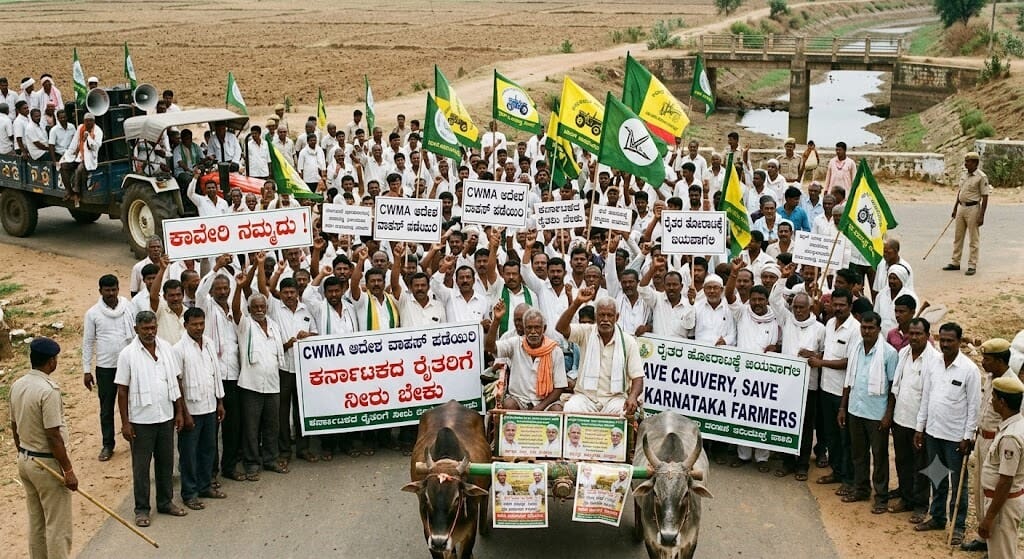
The Cauvery water dispute has flared up again. The Cauvery Water Management Authority (CWMA), meeting in New Delhi on Thursday, July 30, upheld an order directing Karnataka to release Cauvery water to Tamil Nadu — rejecting the state’s appeal. Karnataka Chief Minister D.K. Shivakumar has called an all-party meeting to decide the state’s next move, as protests continue across the Cauvery basin.
What the CWMA Ordered
The CWMA upheld the recommendation of the Cauvery Water Regulation Committee (CWRC), directing Karnataka to release 3,500 cusecs of water per day to Tamil Nadu, with a total of 4 TMC over 15 days. The CWRC had originally issued this order on July 28, with release effective from July 29. Karnataka had filed an appeal against the CWRC order before the CWMA — an appeal that has now been rejected.
Why Karnataka Is Resisting
Karnataka’s Water Resources Minister Ramalinga Reddy has argued the state’s reservoirs hold barely enough water to meet its own drinking water needs, leaving nothing to spare for release. He pointed out that:
- Tamil Nadu’s Mettur reservoir still holds around 40 TMC of water
- Tamil Nadu’s northeast monsoon is due to begin soon, easing its own supply concerns
- Bengaluru’s water utility (BWSSB) has already announced measures to use water judiciously amid reduced supply
Farmer groups in districts like Mandya, Mysuru, and the Haveri command area say standing sugarcane and banana crops have already dried up, and that releasing water now would be irreversible for this season’s harvest.
The Protests and Political Response
Protests have been reported across Bengaluru, Bengaluru South, Mysuru, and Mandya districts against the CWMA’s directive. Farmer leader Kurubur Shanthakumar has urged the state government to defy the verdict entirely and approach the Supreme Court instead.
Meanwhile, a delegation of BJP MPs — led by Union Minister Pralhad Joshi and former Karnataka CM Basavaraj Bommai — met Union Jal Shakti Minister C.R. Patil in Delhi, urging the Centre not to press ahead with enforcing the release.
What Happens Next
CM D.K. Shivakumar is expected to convene an all-party meeting soon after returning from Delhi, bringing together legislators and MPs from the Cauvery basin to chart the state’s legal and political response — including whether to challenge the CWMA’s order before the Supreme Court.
The dispute also comes amid renewed tension over Karnataka’s proposed Mekedatu balancing reservoir, which Tamil Nadu opposes. Shivakumar maintains the project is within Karnataka’s rights and would ultimately benefit Tamil Nadu as well by regulating surplus flow.
Why This Dispute Keeps Recurring
The Cauvery dispute is one of India’s oldest inter-state water conflicts, rooted in colonial-era agreements and a 2007 Cauvery Water Disputes Tribunal award later modified by the Supreme Court in 2018. The core tension is structural: Karnataka is the upper riparian state controlling the river’s flow, while Tamil Nadu — as the lower riparian state — depends on that release for its irrigation, particularly the Kuruvai and Samba paddy crop cycles. Every monsoon shortfall reopens the same fight over how much water Karnataka can spare versus how much Tamil Nadu is legally owed.
Bottom Line
For now, Karnataka faces a CWMA order it says it cannot comply with, mounting farmer protests at home, and a political calculation ahead: whether to release the water, escalate to the Supreme Court, or find a middle path at the all-party meeting. This is a developing story — expect further updates as Karnataka’s response takes shape.
This article will be updated as Karnataka’s government finalizes its response following the all-party meeting.